
Restroom planning for automatic touchless faucet decisions
A visual resource for comparing, specifying, installing, and maintaining automatic touchless faucets across commercial restrooms, healthcare facilities, schools, restaurants, offices, airports, hotels, and high-traffic public washrooms.
Explore practical guidance on sensor activation, water efficiency, power source planning, finish selection, ADA-conscious placement, maintenance access, hygiene performance, and long-term restroom value.
Welcome to Auto Touchless Faucets
Evidence-based guidance for hygienic, code-aligned commercial restroom systems.
Read More →Auto Faucet Engineering Considerations
Commercial performance depends on more than sensor activation. Basin geometry, water pressure, power and service access should be reviewed together.
| Auto Faucet Specification | Commercial Design Consideration |
|---|---|
| Sensor Technology | Electronic sensing should provide predictable hand detection while minimizing unintended activation. |
| Activation | Hands-free automatic operation with automatic water shutoff after hands leave the detection zone. |
| Flow Rate | Commercial lavatory applications commonly use controlled low-flow configurations such as 0.35–0.5 GPM where suitable. |
| Power | Battery, low-voltage DC, hardwired or hybrid configurations may be considered according to project requirements. |
| Mounting | Deck-mounted and wall-mounted auto faucet configurations require different rough-in, access and basin coordination. |
| Construction | Commercial-grade brass or stainless-steel construction may improve durability in demanding installations. |
| Temperature | Specify cold-only, preset mixed or adjustable temperature operation according to the application. |
| Serviceability | Filters, solenoids, batteries, power supplies and shutoff valves should remain accessible. |
How an Auto Faucet Works
Automatic faucets combine detection, electronic control and a solenoid valve to deliver water only when a user is positioned within the intended activation zone.
What Makes a Commercial Auto Faucet Reliable?
The activation zone should match natural hand position without responding continuously to the basin or surrounding surfaces.
Water should land inside the usable basin area rather than against the rear wall or close to the front edge.
Excessive or unstable pressure can increase splash, noise and component stress. Verify project conditions before commissioning.
Battery packs, transformers and electrical connections should be positioned where maintenance teams can reach them.
Accessible strainers help technicians remove debris that can reduce flow or interfere with valve performance.
Test detection, water landing, flow, shutoff timing and unintended activation before the restroom enters service.
Your practical guide to automatic touchless faucet decisions

Match the faucet to the building, traffic level, sink layout, and maintenance plan.

Clean guest experience

Hygiene-focused spaces


Commercial Touchless Faucet Planning
Modern sensor faucet planning
A clean brushed-metal finish gives commercial washrooms a polished, professional look while supporting contactless handwashing performance.
View DetailsCoordinated sink stations
Coordinated touchless faucet layouts help restroom teams plan cleaner counters, consistent activation zones, and easier fixture maintenance.
View DetailsBuilt for busy restrooms
Durable touchless faucets help reduce surface contact and support consistent handwashing routines throughout the day.
View DetailsClean guest experience
Sleek automatic faucets help hotels, restaurants, and lounges create a more refined restroom experience with cleaner touchless operation.
View DetailsReliable automatic activation
Sensor-controlled faucets help limit unnecessary contact, support water control, and deliver dependable operation in commercial sink areas.
View DetailsDesigned for hygiene-focused spaces
Automatic faucets support cleaner handwashing areas in clinics, medical offices, care facilities, and other hygiene-sensitive settings.
View DetailsPerformance for heavy daily use
Automatic faucet planning helps busy facilities reduce user contact, maintain restroom flow, and keep public washrooms operating smoothly.
View DetailsRefined commercial restroom style
Premium touchless faucets combine clean styling with practical operation for upscale offices, hotels, restaurants, and public venues.
View DetailsBetter faucet decisions by application
Best automatic faucet factors
Compare sensor range, flow rate, power source, finish durability, mounting style, and service access.
Read the checklist →Why touchless faucets fail
Understand weak activations, sensor placement issues, low battery power, solenoid faults, and water pressure problems.
Explore guide topics →Touchless restroom upgrades
Focus on hygiene support, reliable activation, accessible reach, water control, and fixture placement.
Read more →Heavy-use restroom planning
Plan for traffic peaks, sensor reliability, cleaning cycles, sink layout, vandal resistance, and long-term maintenance.
View facility guide →Clear guides for automatic touchless faucet performance
Sensor Performance
Review detection range, activation consistency, shutoff timing, reflective surfaces, and user movement near the sink.
Water Efficiency
Understand how flow rate, aerator selection, run time, and sensor shutoff behavior influence restroom water use.
Hygiene Planning
Explore how touchless faucet operation supports reduced surface contact and cleaner public handwashing routines.
Maintenance Access
Plan for power replacement, solenoid service, filter cleaning, under-deck access, mixing controls, and troubleshooting.
Automatic Faucet Engineering Questions
How does an auto faucet work?
An auto faucet detects a user’s hands through an electronic sensor. The controller then energizes a solenoid valve, allowing water to flow. When the hands leave the detection zone, the controller closes the valve automatically.
Are auto faucets good for commercial restrooms?
Yes. A properly selected commercial automatic faucet can reduce unnecessary handle contact, control water runtime and simplify standardized handwashing. Reliability still depends on correct basin compatibility, sensor setup, pressure, power and maintenance access.
How much water does an auto faucet use?
Water use depends on flow rate and activation duration. Many commercial lavatory faucets are specified with controlled low-flow outlets, including approximately 0.35–0.5 GPM configurations where appropriate for the project and applicable requirements.
Why does an automatic faucet activate by itself?
Unintended activation may result from sensor calibration, reflective basin surfaces, nearby movement, incorrect fixture positioning or installation conditions. Commissioning should verify that the detection field responds only inside the intended handwashing zone.
Planning an Auto Faucet Project?
Evaluate faucet type, basin geometry, flow rate, temperature strategy, sensor requirements, power architecture and service access before final selection.
Featured Products & Innovations
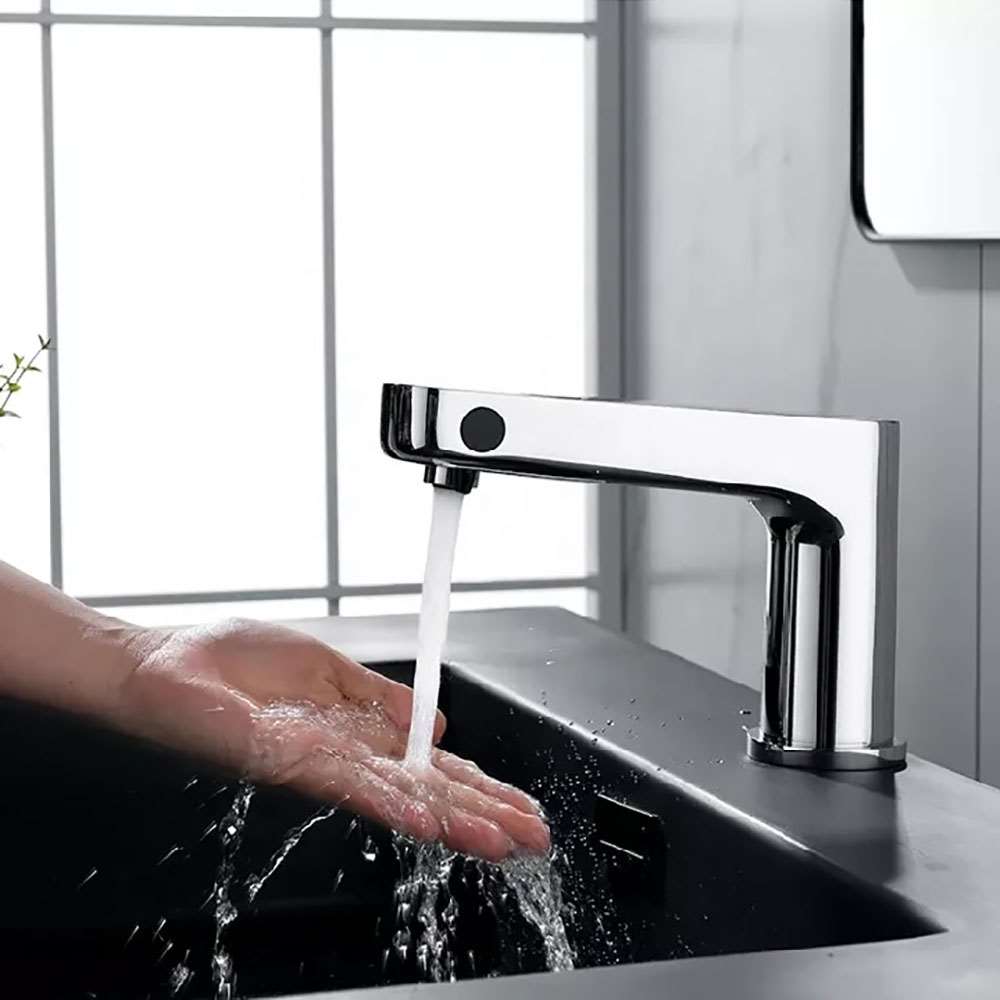
Touchless faucet selection guidance for architectural projects, with focus on compatibility, durability, and compliance
Read More →
A touchless faucet paired with a vessel sink can function as an integrated system, supporting compatibility, coordinated design, installation efficiency, and overall project cost control.
Read More →