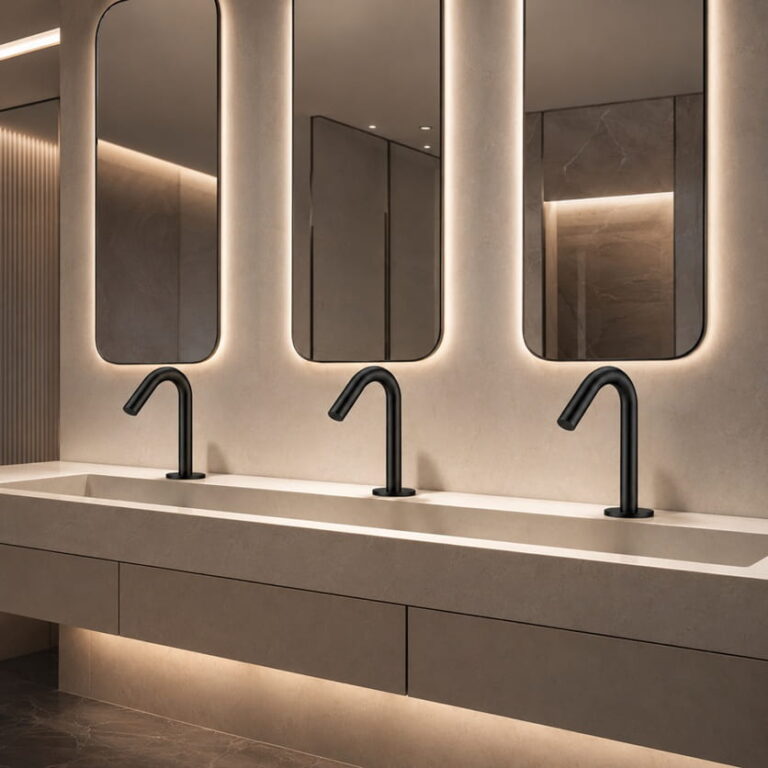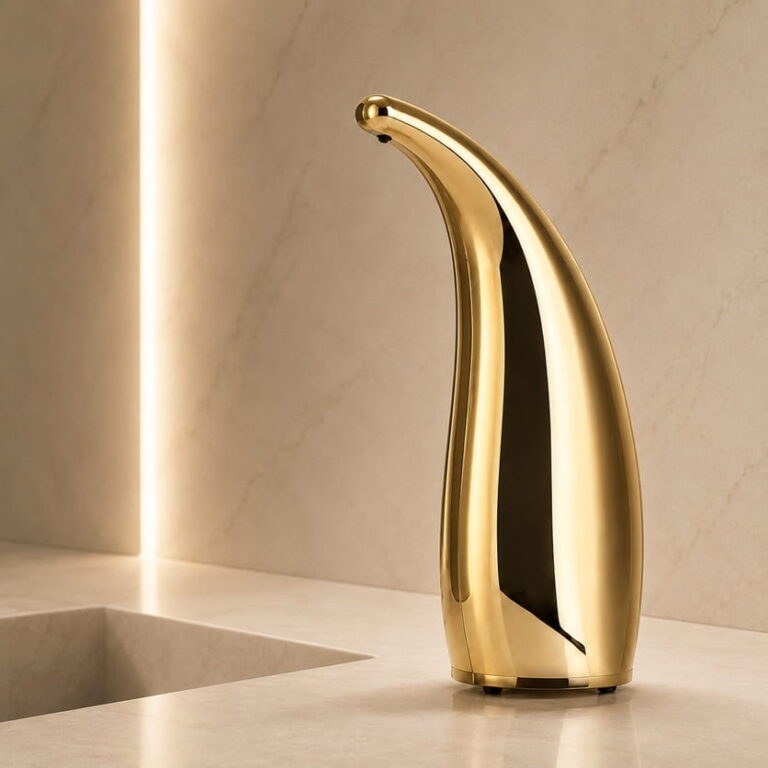

Elevate your restroom experience with Architectural Design Touchless Restroom Faucets
Modern commercial restrooms are no longer treated as purely utilitarian spaces. For architects, engineers, and facility planners, restroom environments now play a measurable role in user perception, public health performance, water efficiency, and long-term operational cost. Architectural design touchless restroom faucets sit at the intersection of these priorities, combining sensor-based control, advanced materials, and form-driven design suitable for high-traffic public and commercial spaces.

How it helps Architects, Engineers and Designer and AEC indurty?
SummaryExplores how touchless faucet systems elevate restroom performance through design, engineering, and evidence-based outcomes, with guidance for AEC professionals specifying fixtures for modern projects.
Why architectural touchless faucets matter in commercial design
Hygiene + PerceptionTouchless faucets were initially adopted to reduce surface contact and improve hygiene. Over the past decade, their role has expanded significantly. Contemporary architectural models integrate precision electronics, sculptural metalwork, and compliance-driven performance that aligns with sustainability standards and building codes.
Research from the American Society for Healthcare Engineering indicates that hand contact points in public restrooms are among the most frequent vectors for cross-contamination, particularly in high-turnover facilities such as airports, schools, healthcare centers, and office towers. Touchless faucet systems reduce contact frequency while providing consistent activation behavior.
In parallel, design studies from hospitality and workplace research groups show that users associate touchless fixtures with cleanliness, modernity, and higher building quality. This perception directly impacts tenant satisfaction and brand experience in commercial environments.
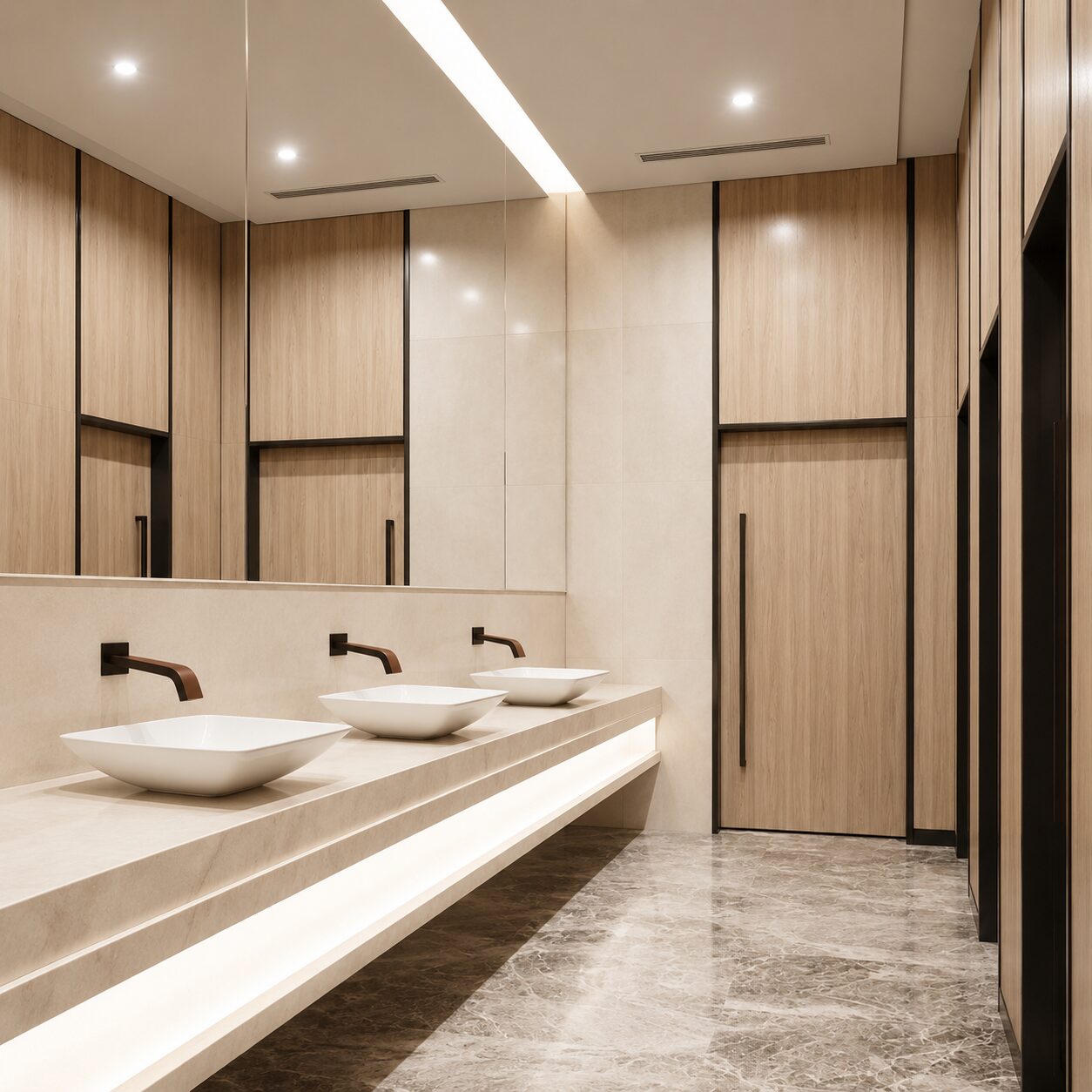
Engineering fundamentals behind modern touchless faucets
Performance CriteriaFrom an engineering perspective, architectural touchless faucets differ significantly from early sensor models. Today’s commercial-grade units are designed around several core performance criteria.
Sensor technology
Most architectural faucets now use infrared or adaptive sensing technology that dynamically adjusts activation distance based on ambient light and reflectivity. Studies have shown that adaptive sensing reduces false activations by up to 35 percent compared to fixed-range sensors, improving both water efficiency and user experience.
Flow regulation and water efficiency
When water flow is Touchless faucets used in commercial establishments tend to have a flow rate of 0.35 to 0.5 gallons per minute. As estimated by WaterSense, a program of the U.S. Environmental Protection Agency, if manual faucets are replaced by sensor-controlled faucets in public restrooms, water usage can be lowered by as much as 30 to 70 percent.
Power systems and reliability
Currently, architectural systems include hybrid power arrangements, with long-life batteries integrated with hard-wired or turbine-assisted power functions. Real-world testing in transport terminals has demonstrated battery life of more than five years with the use of solenoid valves.
Material selection and architectural integration
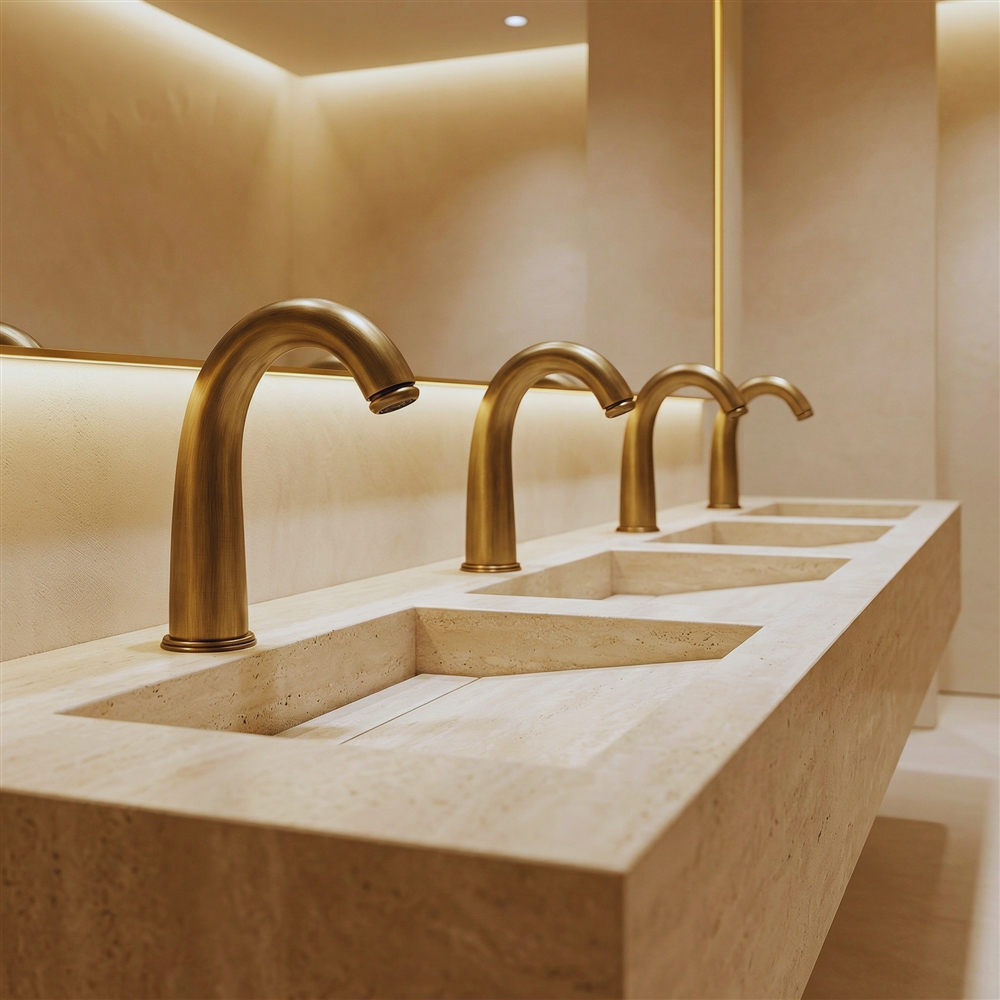
Finishes + DurabilityMaterial choice is one of the defining factors separating architectural-grade faucets from commodity fixtures. For AEC specification teams, material selection impacts durability, vandal resistance, corrosion performance, and visual cohesion with the overall interior design.
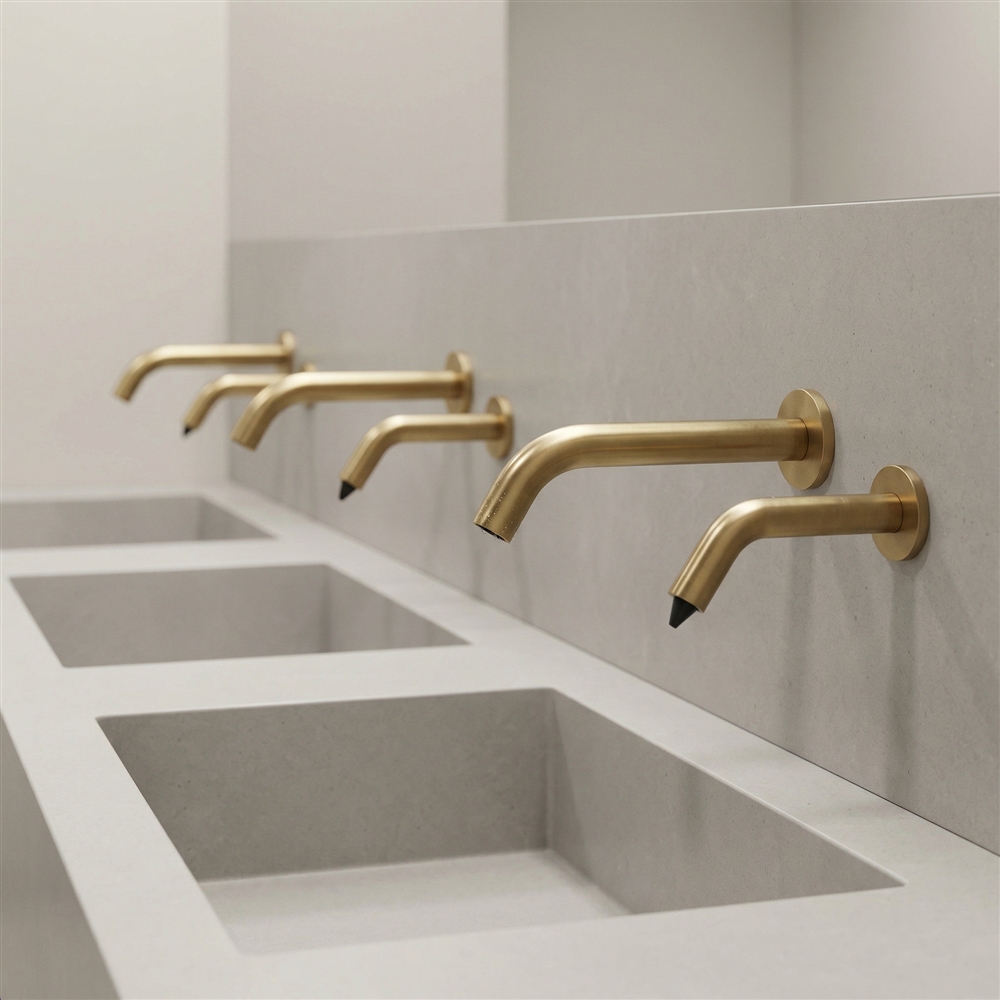
Common architectural finishes include PVD-coated stainless steel, brushed nickel, matte black, brushed brass, and custom tone finishes coordinated with door hardware and accessories. PVD finishes in particular demonstrate superior abrasion and corrosion resistance compared to electroplated coatings, as confirmed by independent materials testing.
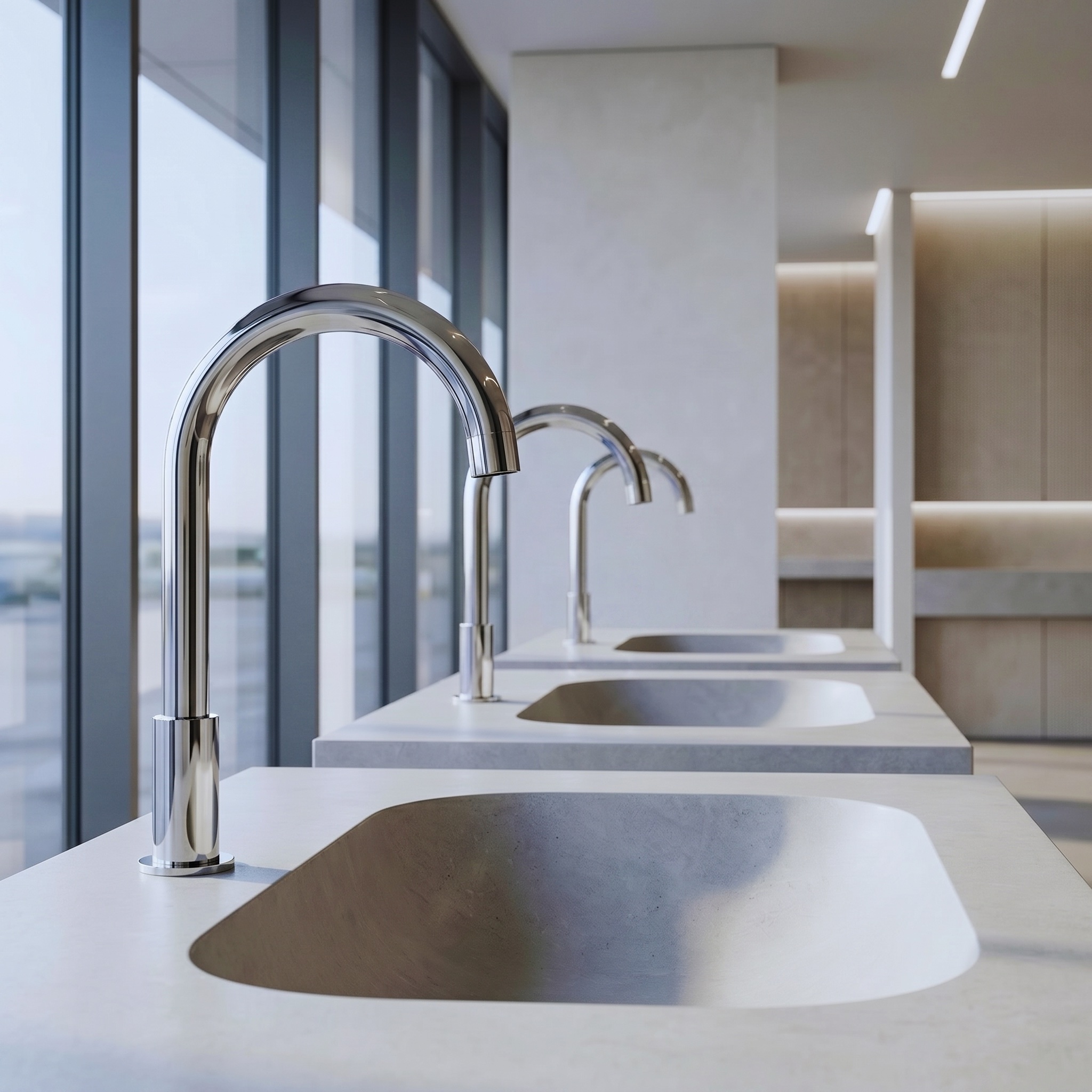
From a design standpoint, architects increasingly specify minimal spout profiles, integrated deck plates, and wall-mounted sensor assemblies that visually declutter the lavatory environment while simplifying cleaning protocols.
Compliance, codes, and performance standards
ADA + ASME + LEEDTouchless faucets used in commercial projects must satisfy a range of regulatory and performance requirements.
ADA compliance
Activation must occur without tight grasping or twisting of the wrist. Sensor response times and shutoff delays are evaluated to ensure accessibility for all users.
ASME and ASSE standards
Many commercial touchless faucets comply with ASME A112.18.1 and ASSE 1070 standards governing plumbing fittings, thermostatic control, and safety.
CALGreen and LEED
Water-efficient touchless faucets support CALGreen requirements and contribute to LEED Water Efficiency credits. Lifecycle assessments indicate that sensor faucets often deliver measurable ROI within three to five years in high-traffic facilities.
Evidence from real-world installations
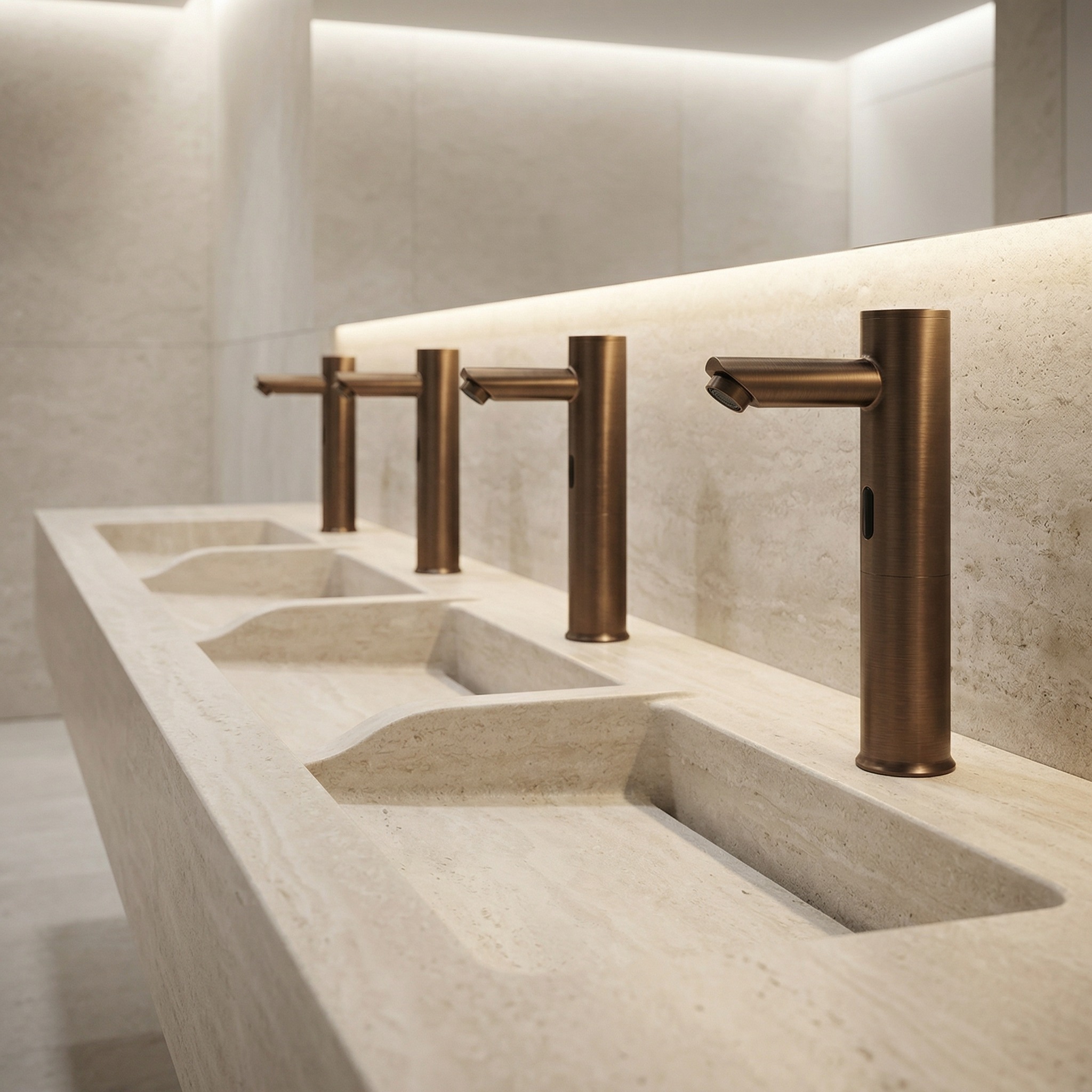
Field OutcomesField studies conducted in airports, universities, and healthcare facilities provide quantifiable insight into the performance of architectural touchless faucets.
A multi-site study published in the Journal of Water Resources Planning and Management documented a 58 percent reduction in restroom water use following the retrofit of sensor faucets across three academic campuses.
In healthcare environments, touchless fixtures were associated with reduced microbial surface counts on sink handles and surrounding surfaces, reinforcing their role in infection-control strategies.
Recommended commercial touchless faucet brands for AEC projects
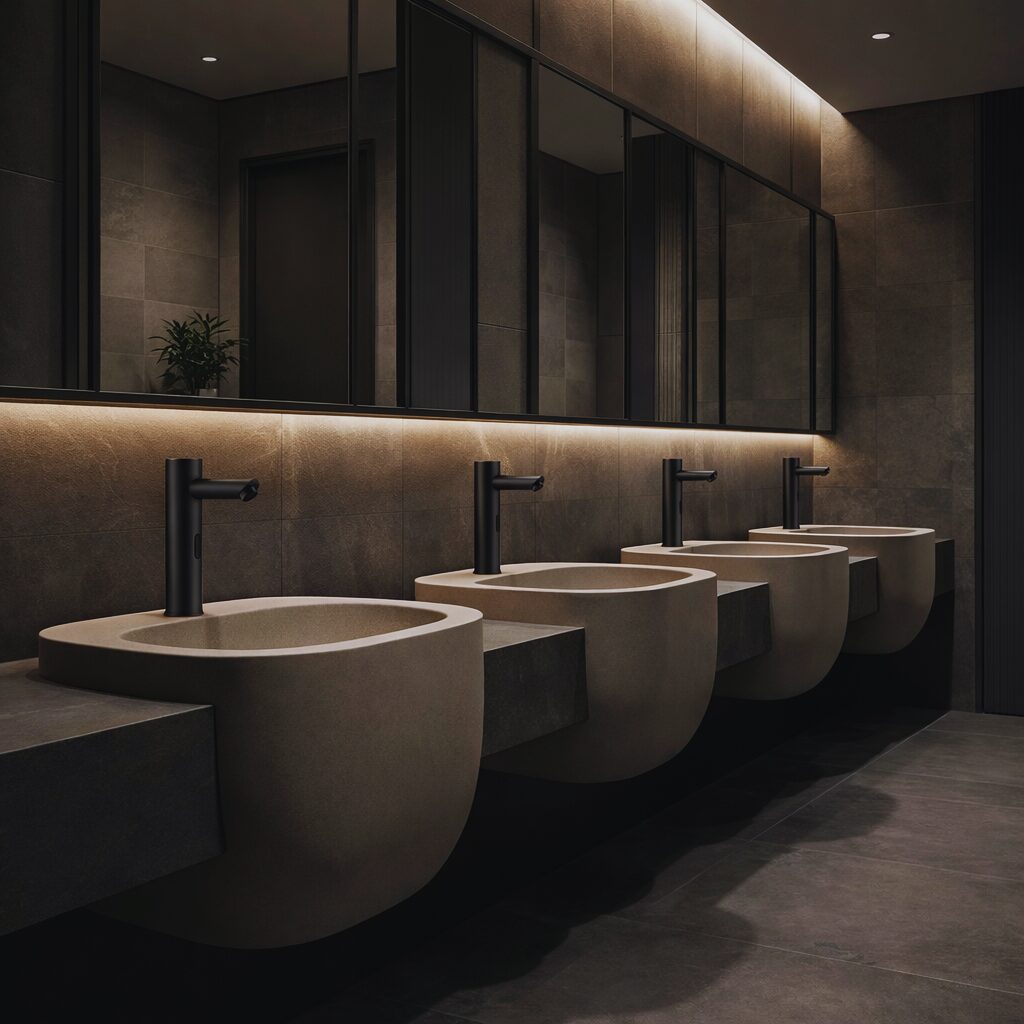
Brand RoutingThe following brands are frequently specified in commercial and institutional projects due to their engineering quality, architectural design options, and compliance credentials.
BathSelect
BathSelect offers commercial touchless faucets designed for high-traffic public restrooms, emphasizing durable metal construction, adaptive sensing, and water-efficient flow rates.
FontanaShowers
FontanaShowers produces architectural touchless faucets with modern aesthetics and ADA-compliant performance in deck and wall-mounted formats.
Kohler Commercial
Kohler’s commercial touchless offerings are widely used in institutional environments, supported by extensive testing and compliance documentation.
TOTO Commercial
TOTO integrates touchless faucet technology with broader hygiene systems, emphasizing consistent sensor performance and water efficiency.
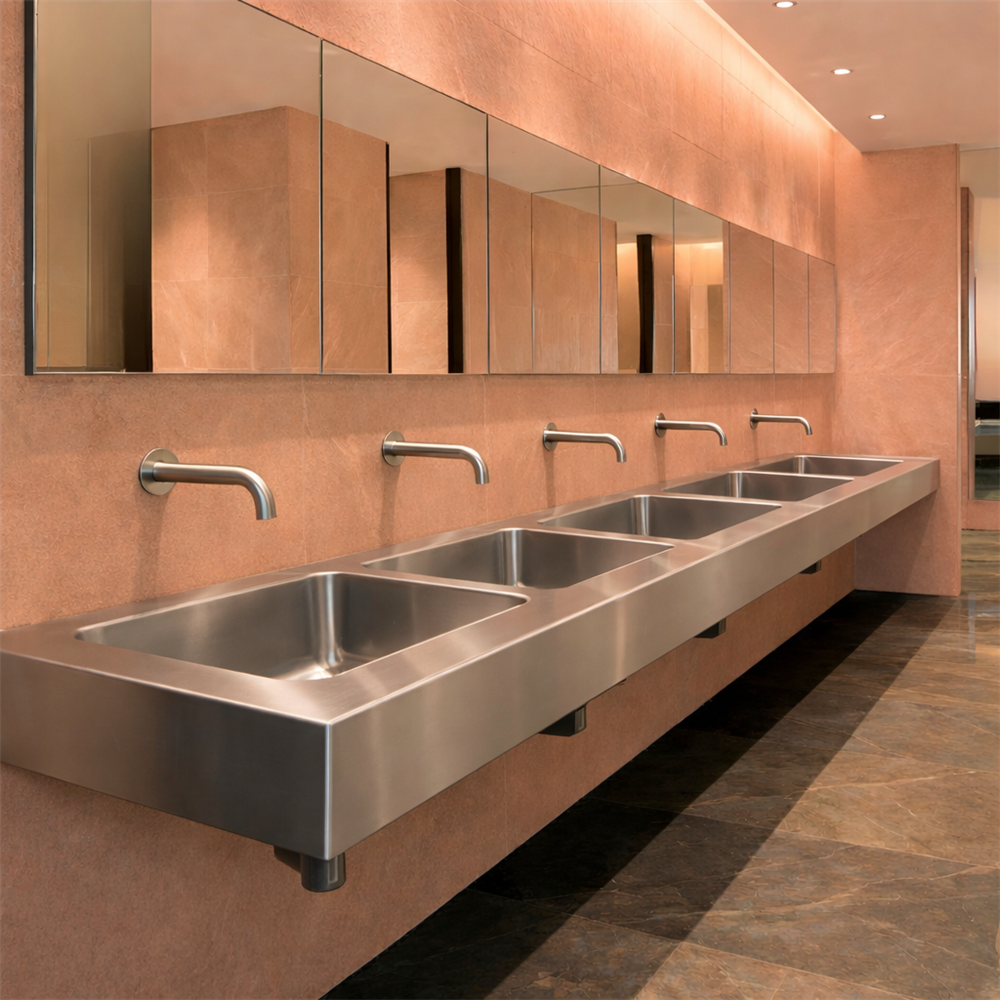
Designing restrooms for the future
ConclusionFor AEC professionals, specifying architectural design touchless restroom faucets is no longer simply a matter of hygiene. These systems support sustainability goals, reduce operational costs, and contribute to the visual language of contemporary commercial interiors.
As building owners increasingly prioritize lifecycle performance and occupant experience, touchless faucet technology continues to evolve, integrating smarter sensors, improved materials, and design flexibility. When properly specified, these fixtures elevate restrooms from functional spaces to carefully engineered environments that reflect modern architectural values.
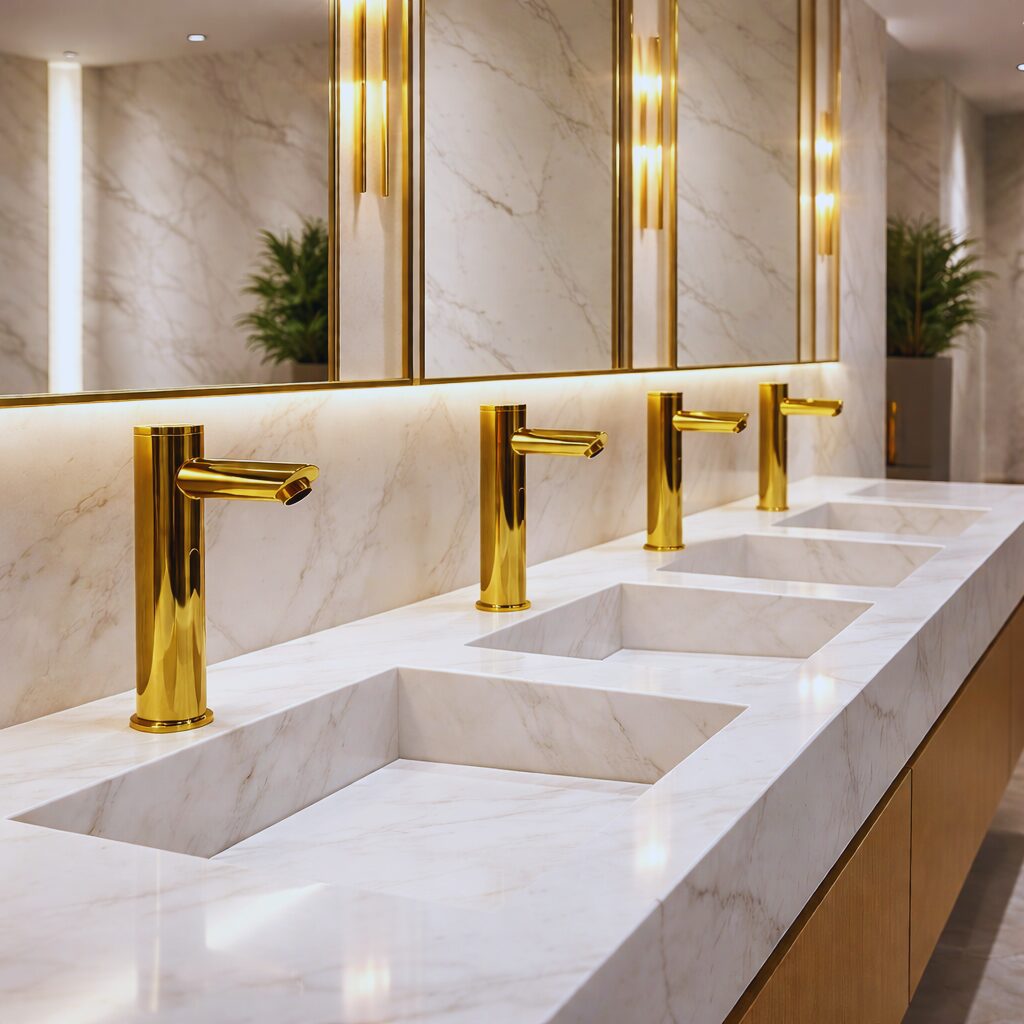
Architectural Specification & Commercial Design Resources
Architectural touchless restroom faucets must balance aesthetics, durability, accessibility, maintainability and engineering performance. The following references support architects, designers, MEP engineers and specification writers during commercial restroom planning. :contentReference[oaicite:0]{index=0}
-
Architect & Specifier Technical Resources
Technical documentation, BIM resources and specification support for commercial restroom projects. -
Architect-Selected Commercial Touchless Faucets
Explores specification priorities for architects designing high-traffic commercial facilities. -
How Architects Specify Touchless Fixtures
Explains specification factors including durability, maintenance and lifecycle performance. -
Architect’s Guide to Touchless Faucets
Guidance for coordinating faucets, soap dispensers, power requirements and service access. :contentReference[oaicite:1]{index=1} -
ARCAT
Architectural specifications, BIM content and CAD resources. -
BIMobject
Digital BIM files supporting coordinated architectural workflows. -
Sweets Construction
Construction product specifications used by architects and engineers. -
CADdetails
Technical drawings and specification resources for design professionals.
Touchless Technology, Engineering & Product Performance
Modern architectural faucets combine sensor technology, precision engineering and water-saving performance to meet the expectations of contemporary commercial buildings. :contentReference[oaicite:2]{index=2}
-
Commercial Touchless Bathroom Faucets
Commercial-grade sensor faucets designed for demanding architectural applications. -
Integrated Touchless Washroom Solutions
Coordinated faucet, soap dispenser and restroom fixture systems. -
Time-of-Flight Sensor Technology
Overview of advanced sensing technologies used in commercial faucets. -
Commercial Sensor Technology Studies
Engineering resources covering commercial touchless plumbing technologies. -
American Society of Plumbing Engineers
Engineering standards for commercial plumbing system design. -
ASTM International
Technical standards supporting commercial construction materials. -
ASME
Engineering standards for plumbing fixtures and mechanical systems. -
NSF
Independent certification supporting public health and product safety.
Commercial Building Planning & AEC Resources
Architectural restroom planning extends beyond fixture selection to include BIM coordination, accessibility, sustainability and long-term building operations. These resources support integrated commercial project delivery. :contentReference[oaicite:3]{index=3}
-
Commercial Product Collection
Specification-grade restroom fixtures for commercial developments. -
FontanaShowers Product Library
Comprehensive commercial fixture catalog for AEC professionals. -
Architectural Faucet Detailing
Design recommendations covering mounting heights and ergonomic planning. -
Architect’s Specification Checklist
Practical checklist covering specification, maintenance and coordinated restroom systems. :contentReference[oaicite:4]{index=4} -
Gensler
Global architecture firm recognized for major commercial developments. -
Skidmore, Owings & Merrill
International architecture and engineering practice. -
AECOM
Worldwide infrastructure and commercial engineering consultancy. -
WSP
Engineering and design services for complex commercial projects.
Sustainability, Building Operations & Lifecycle Resources
Today’s architectural restroom projects emphasize occupant wellness, water conservation, operational efficiency and lifecycle value alongside visual design. These references provide additional guidance for performance-based specifications. :contentReference[oaicite:5]{index=5}
-
Touchless Faucet Research Studies
Research examining commercial touchless faucet performance and long-term operation. -
Commercial Installation Applications
Touchless restroom solutions across healthcare, hospitality, transportation and commercial facilities. -
ROI of Touchless Technology
Operational and maintenance benefits across high-traffic commercial buildings. -
Architectural Touchless Bathroom Faucets
Discusses modern architectural faucet design for commercial restroom projects. :contentReference[oaicite:6]{index=6} -
LEED Green Building
Sustainable building framework supporting efficient plumbing systems. -
WELL Building Standard
Certification promoting healthier indoor environments. -
EPA WaterSense
Water-efficiency guidance for commercial plumbing fixtures. -
FacilitiesNet
Facility management insights covering maintenance and building operations.

Priya Calder is a staff writer and editorial team member at autotouchlessfaucets.com. Her coverage centers on sensor setup, mounting, maintenance, and facility applications, drawing on manufacturer materials, recognized standards, product documentation, and attributable sources to support clear, useful guidance.