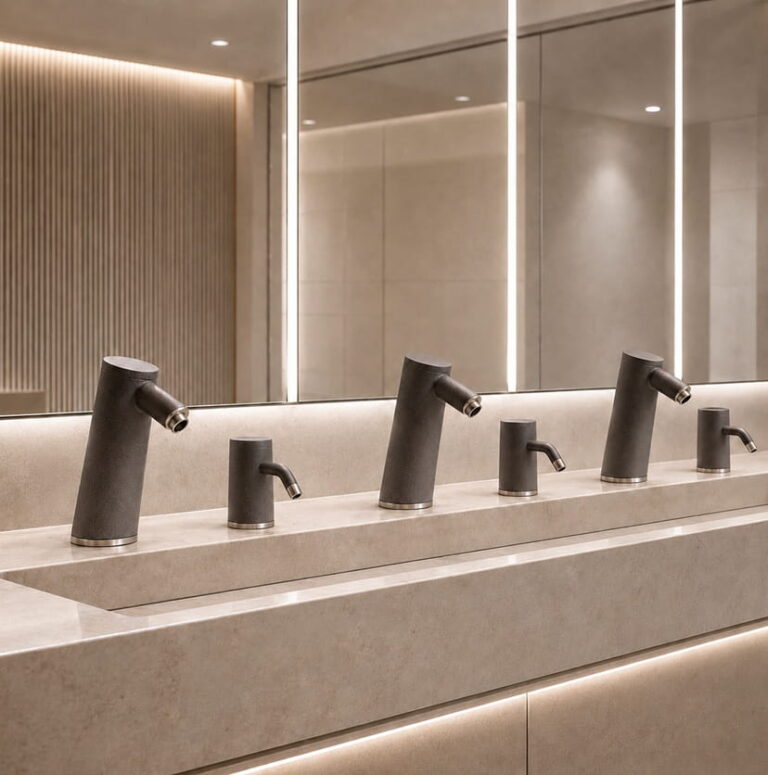

Finish Strategy and Reflectance Control
In contemporary commercial restroom design, material finish is far more than an aesthetic choice. For architects, interior designers, and specification engineers, finish strategy directly impacts perceived cleanliness, ease of maintenance, durability, and how light interacts with surfaces. Touchless faucets — increasingly the standard in modern commercial spaces — present an opportunity to elevate interiors through thoughtful finish selection.
This article examines finish strategy and reflectance control, focusing on how gloss levels and advanced finishes like Physical Vapor Deposition (PVD) affect perceived cleanliness, fingerprint visibility, and light behavior in restroom environments. Backed by research and industry guidance, it offers practical insights and product recommendations tailored to commercial restroom projects.

The role of finishes in perception and performance
Perceived CleanlinessPerception of cleanliness
Perceived cleanliness — a psychological response — is influenced by how surfaces reflect light and show or hide imperfections. Architectural research highlights that high-reflectance finishes create environments that appear brighter and cleaner, but they can also reveal smudges and fingerprints more readily than lower-reflectance surfaces.
A study published in Journal of Environmental Psychology notes that environments perceived as brighter and uncluttered elicit stronger impressions of cleanliness and hygiene among occupants.
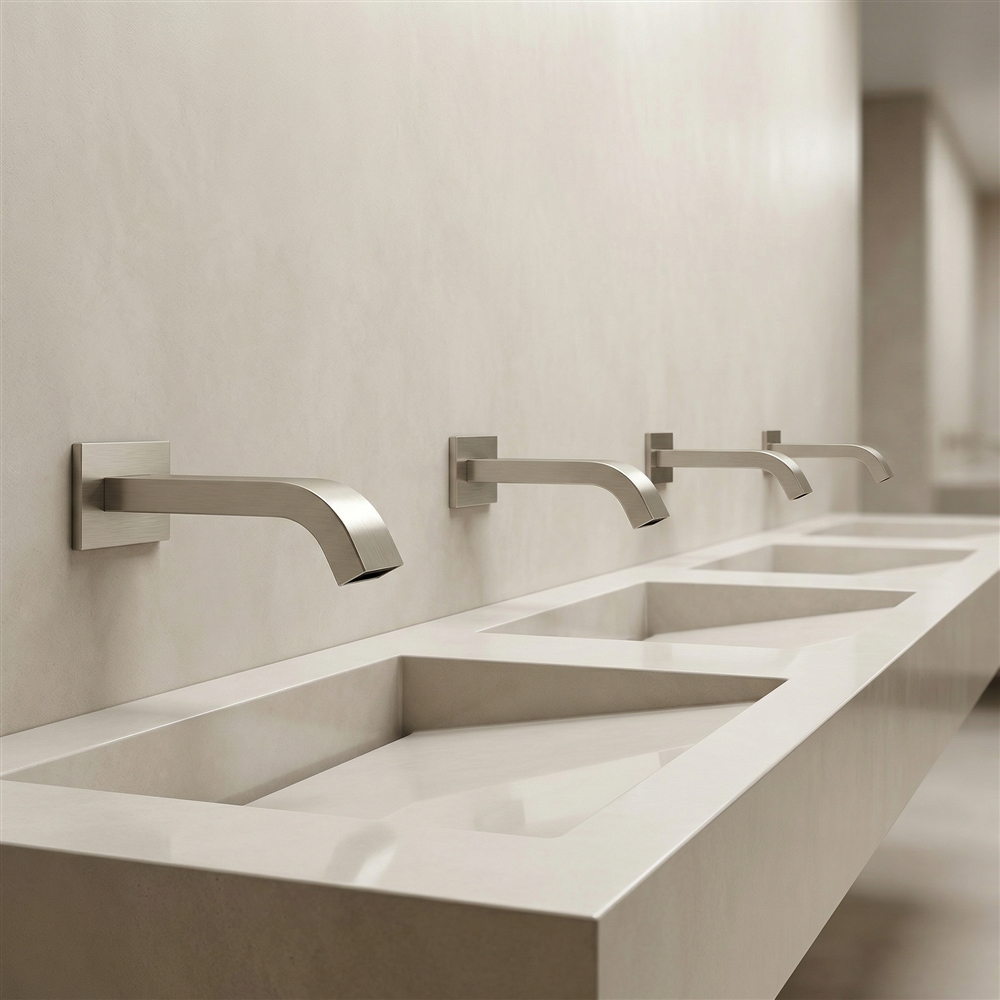
However, gloss finishes that are too reflective often show fingerprints and water spots under direct lighting, detracting from the very perception they seek to enhance. In contrast, mid-level satin or matte finishes diffuse light, minimizing visible marks while preserving a sense of quality.

Gloss levels and visual behavior
Reflectance + MarksGloss, reflectance, and cleanliness
Gloss level refers to the amount of light reflected from a surface. High-gloss finishes reflect a larger proportion of incident light in a specular (mirror-like) direction, causing specular highlights. These highlights can make a restroom look vivid and luxurious under well-designed lighting schemes. Yet, in real-world commercial settings, high gloss can reveal fingerprints, spots, and even micro-abrasions more quickly.
Lower gloss finishes scatter light, reducing sharp reflections and making surface contamination less visually pronounced.
A technical report from the Coatings Research Institute explains that gloss levels above 70 (on a 0–100 gloss meter scale) are most susceptible to visible surface marks in high-traffic areas, while values between 20–40 provide a practical balance of perceived quality and reduced mark visibility.
For restroom designers, this means that a satin or brushed finish may outperform a high-gloss polished chrome in a busy commercial restroom, not only in perceived cleanliness but in daily maintenance efficiency.

Physical Vapor Deposition (PVD) and advanced finishes
DurabilityPVD is a vacuum deposition process that produces ultra-durable, decorative metal finishes. Compared to traditional electroplating, PVD coatings exhibit superior abrasion resistance, corrosion protection, and color retention.
Advantages of PVD
- Durability: PVD coatings bond strongly to the substrate, resisting wear from cleaning agents and abrasion in high-traffic environments.
- Corrosion resistance: Independent materials testing shows PVD finishes retain integrity far longer in humid restroom environments compared to electroplated finishes.
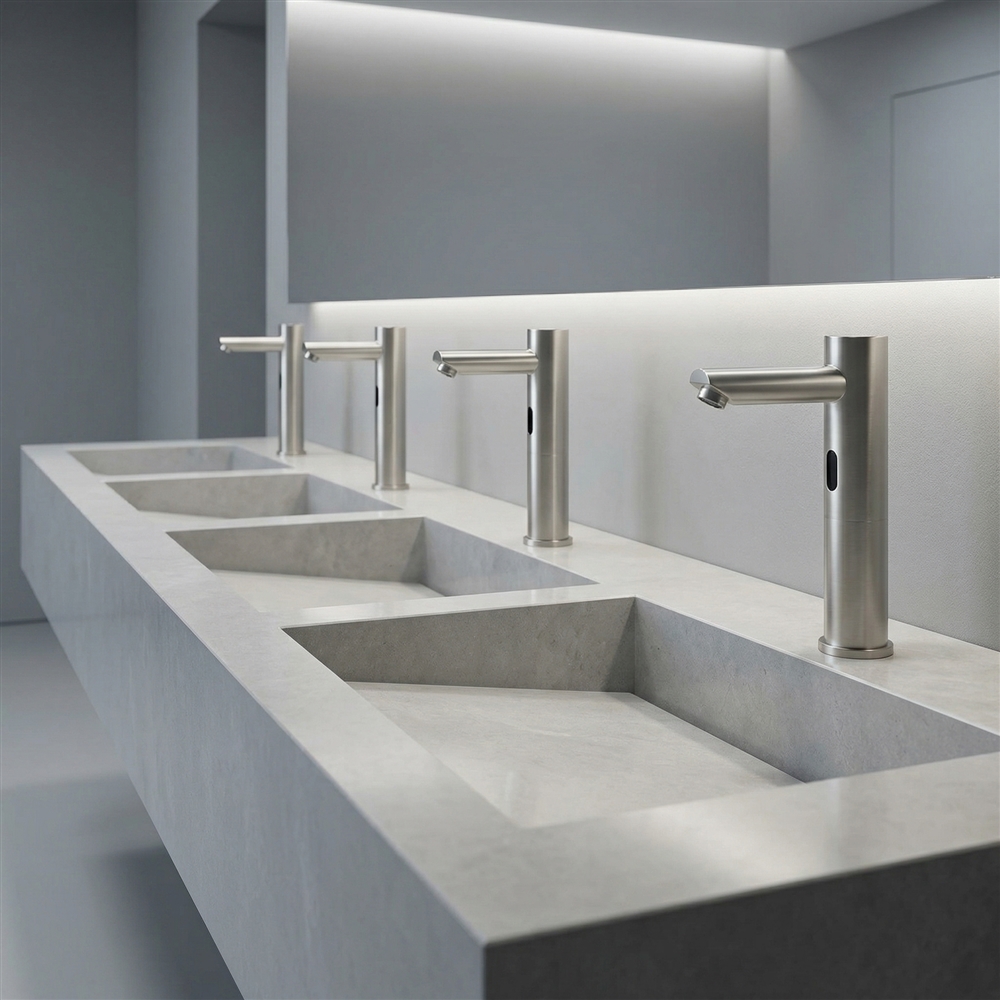
Fingerprint control: Matte and brushed PVD finishes tend to hide fingerprints and water spots more effectively than polished metal finishes, reducing cleaning frequency and improving user perception.
Consistent color: PVD processes can create finishes like brushed gold, titanium black, or warm bronze with consistent visual appearance across production runs — important for design continuity in large projects.

Light bounce and reflectance control
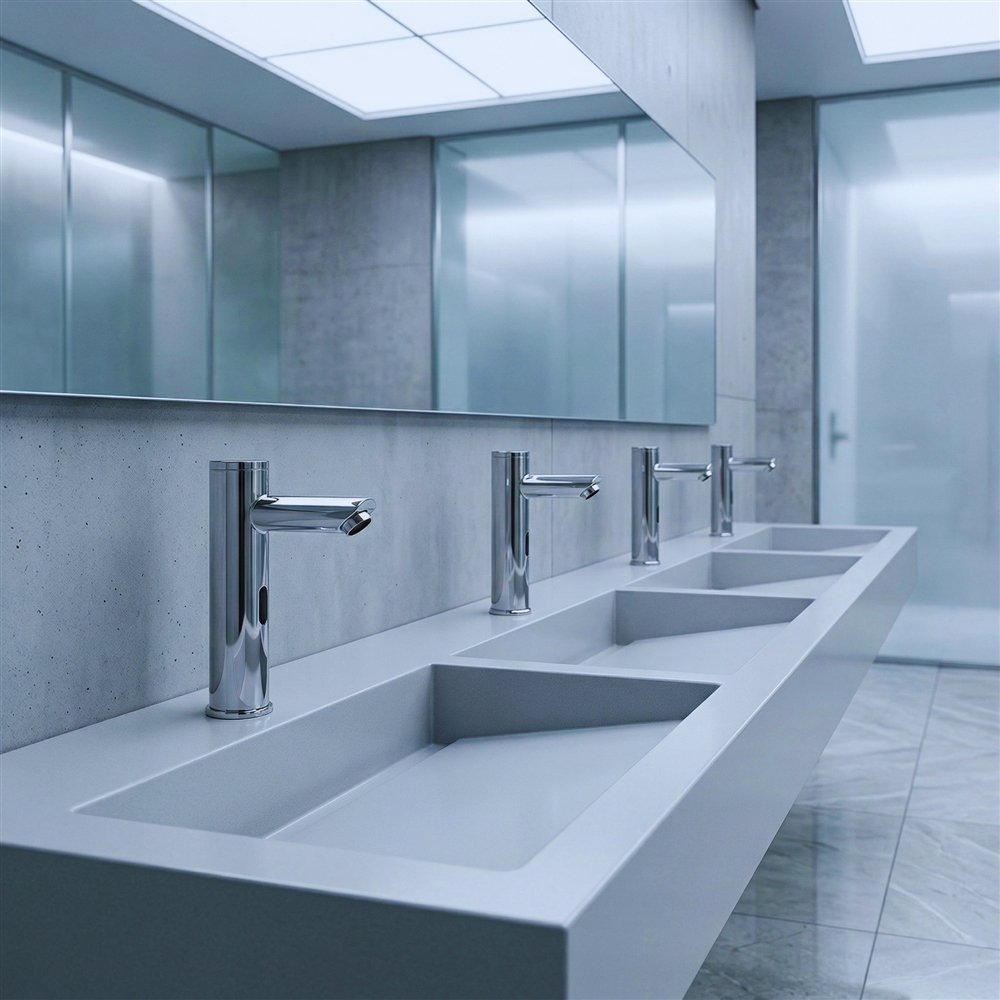
Lighting + GlareLighting design plays a critical role in restroom experience. Reflectance — how a surface returns light — affects spatial brightness, perceived space size, and contrast.
Modern lighting design guidelines for commercial restrooms recommend surfaces with moderate reflectance values to avoid glare while maintaining sufficient brightness for task areas. For instance, mid-reflectance finishes on faucet surfaces can help light bounce uniformly across the sink area without creating sharp glare that causes visual discomfort.
The IES (Illuminating Engineering Society) acknowledges that specular surfaces produce high contrast under directional lighting, which can interfere with visibility for some users.
Cobranding lighting strategies with finish selection — such as using diffused downlights instead of direct spotlights over highly polished surfaces — can mitigate these issues.
Maintenance and long-term performance
LifecycleCleaning cycles and surface durability
Commercial restrooms with high user turnover require finishes that withstand frequent cleaning. High-gloss electroplated surfaces often show micro-scratches over time, especially when aggressive cleaners are used. In contrast, PVD and brushed finishes maintain appearance with less visible wear.
Facility managers report that finishes with lower reflectance values hide routine wear and tear, reducing perceived degradation over time and improving overall asset longevity.
Brand recommendations
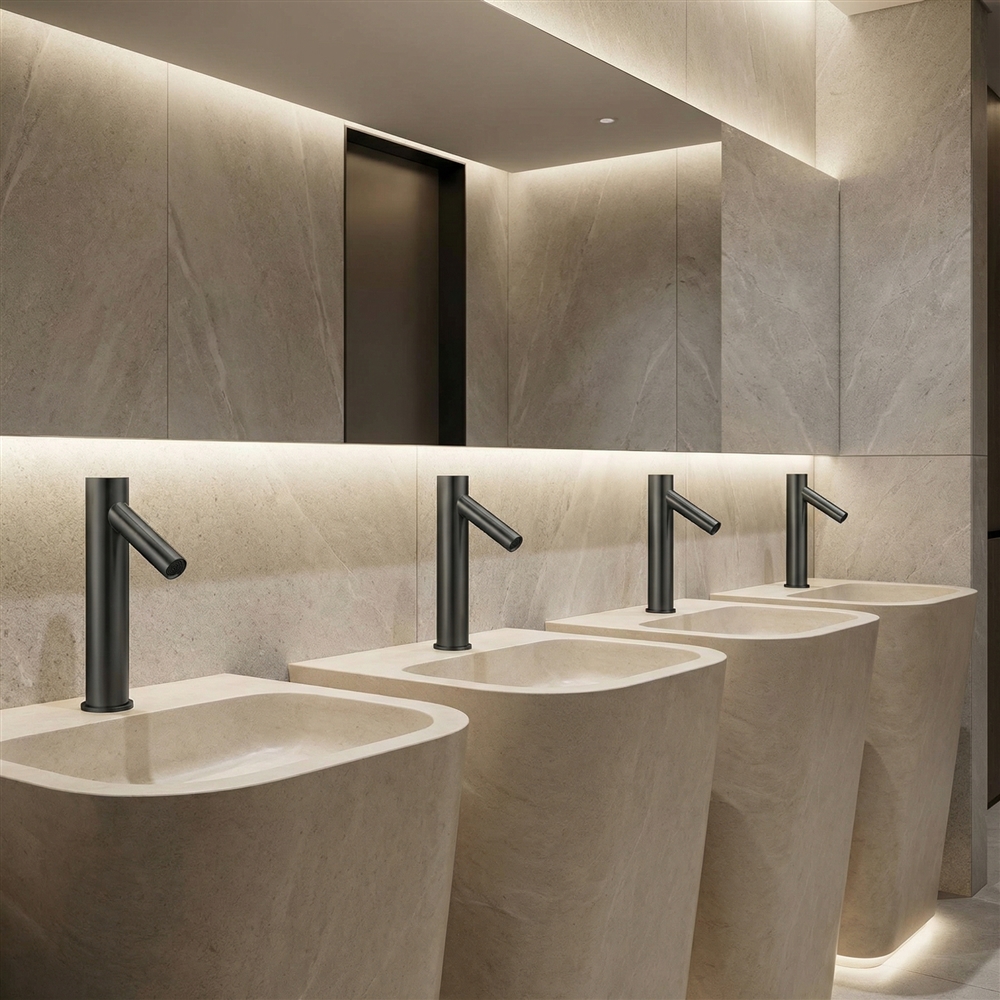
Commercial TouchlessThe following manufacturers consistently deliver commercial-grade touchless faucets with finish options optimized for reflectance control, durability, and aesthetic performance.
BathSelect – Commercial Touchless Faucets
BathSelect offers finishes including brushed nickel, matte black, and satin stainless engineered to balance perceived cleanliness, reflectance control, and ease of maintenance for commercial restrooms in offices, hospitality, and public facilities.
Kohler – Commercial Touchless Faucet Systems
Kohler’s commercial line includes options from polished chrome to brushed and PVD-enhanced finishes. Their spec materials support design reviews and documentation workflows.
TOTO – Commercial Touchless Faucets
TOTO’s commercial faucet offerings emphasize performance and water efficiency, with finishes that resist fingerprints and minimize the appearance of water spots.
Moen – Commercial Touchless Series
Moen’s commercial touchless line features brushed and PVD options developed for performance under frequent use, with supporting specification data for surface performance.

Specifying finishes: practical guidelines for AEC professionals
Submittals- Use reflectance data in submittals: Request reflectance values or gloss meter measurements to objectively evaluate finish performance.
- Coordinate lighting with finish: Align lighting design and finish selection so they complement each other.
- Anticipate cleaning protocols: Provide manufacturer-recommended cleaning procedures and approved agents to preserve finish integrity.
- Prioritize PVD for high-use environments: Use durable finishes to reduce life-cycle costs and maintain appearance.
Conclusion
Design + OperationsFinish strategy and reflectance control are essential considerations in modern commercial restroom design. Gloss level, finish type, and how light interacts with touchless faucet surfaces influence perceived cleanliness, maintenance requirements, and user comfort.
For AEC professionals, understanding the technical implications of finish selection — supported by documented research and performance testing — enables better specification decisions, improved design outcomes, and greater long-term asset performance. Thoughtfully chosen finishes not only add elegance and sophistication but also contribute to sustainability, user perception, and operational efficiency in commercial environments.

Priya Calder is a staff writer and editorial team member at autotouchlessfaucets.com. Her coverage centers on sensor setup, mounting, maintenance, and facility applications, drawing on manufacturer materials, recognized standards, product documentation, and attributable sources to support clear, useful guidance.
You Might Also Like