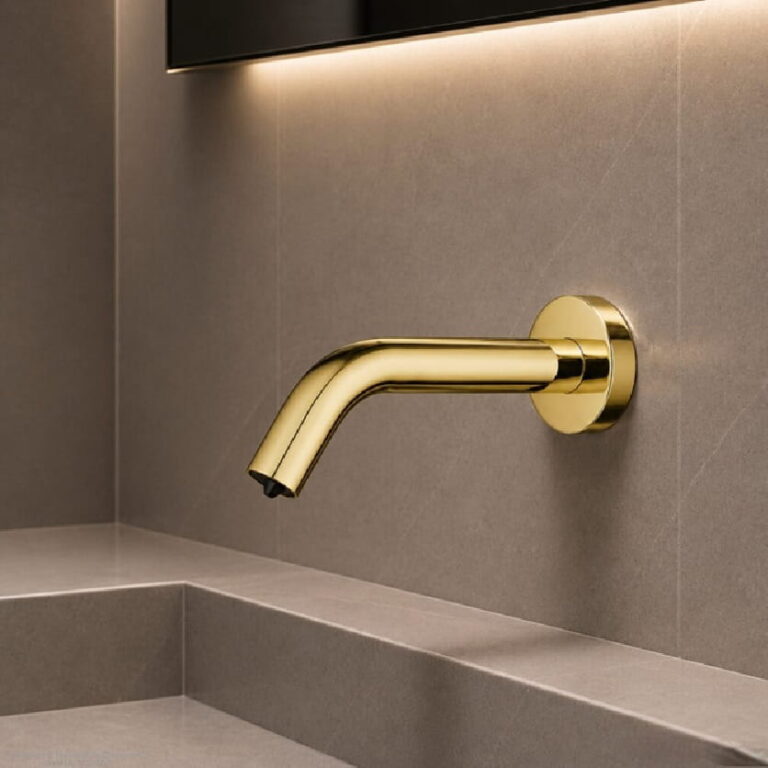

Integrating Touchless Faucets and Vessel Sinks for System Compatibility and Installation Efficiency
In contemporary commercial restroom design, integrating touchless faucets with vessel sinks represents a convergence of aesthetics, performance, and installation practicality. For architects, engineers, and construction professionals, understanding how these systems interface is critical to achieving design intent, compliance, and operational efficiencies within budget constraints.
Research Coverage
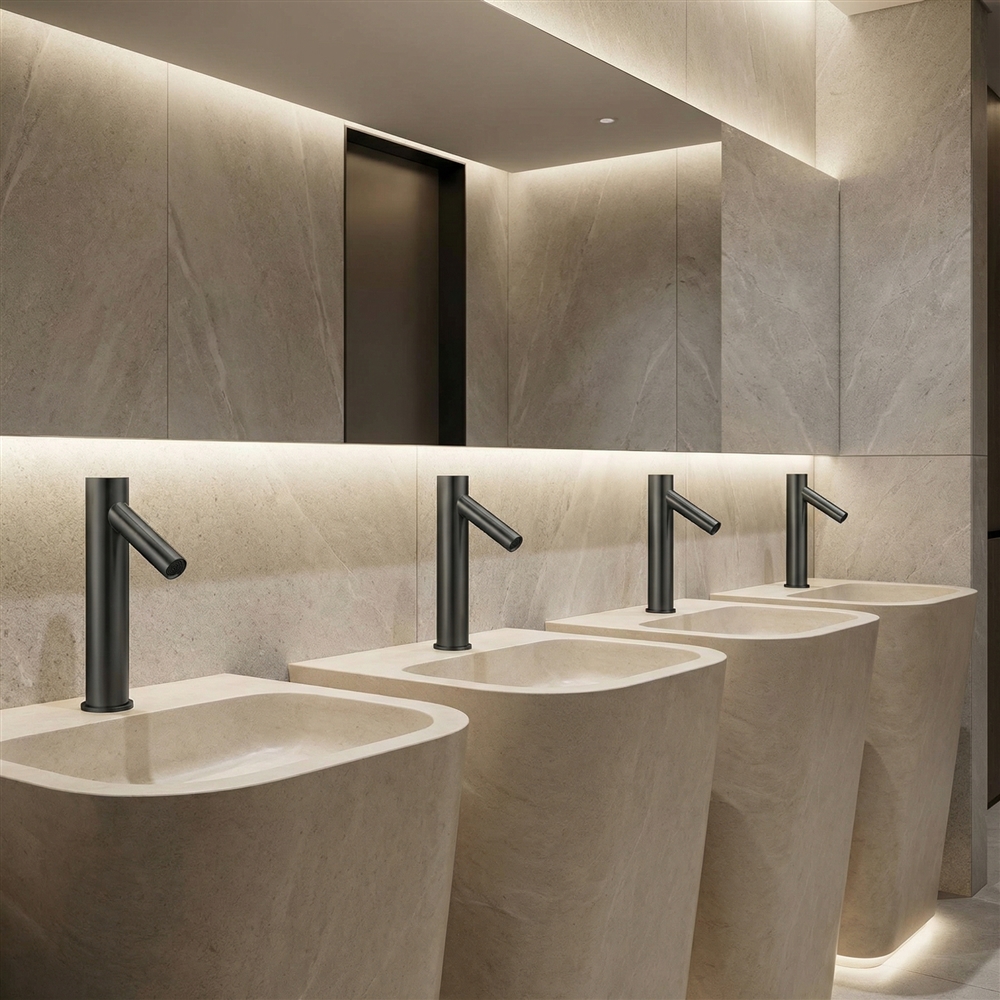
Specification-drivenThis article explores the technical and specification-driven considerations behind pairing touchless faucets with vessel sinks, emphasizing compatibility, installation efficiency, and lifecycle cost management. It includes evidence from industry standards, performance data, and product recommendations tailored to commercial restroom environments.

The appeal of touchless faucets paired with vessel sinks
Design + UXTouchless faucets have become a ubiquitous specification in commercial restrooms due to their hygiene benefits, water efficiency, and user perception advantages. Vessel sinks—distinctive above-counter basins—have simultaneously grown in popularity for their sculptural presence and design flexibility. When both are implemented as an integrated system, they offer:
- Coordinated design language across fixture elements
- Enhanced ergonomic performance
- Streamlined installation interfaces
- Lifecycle cost efficiencies through reduced maintenance
Multiple studies indicate that user satisfaction increases when fixtures reflect an intentional design system rather than a collection of disparate components. Vessel sinks paired with well-designed touchless faucets can help achieve that cohesion.
Technical fundamentals: ensuring system compatibility
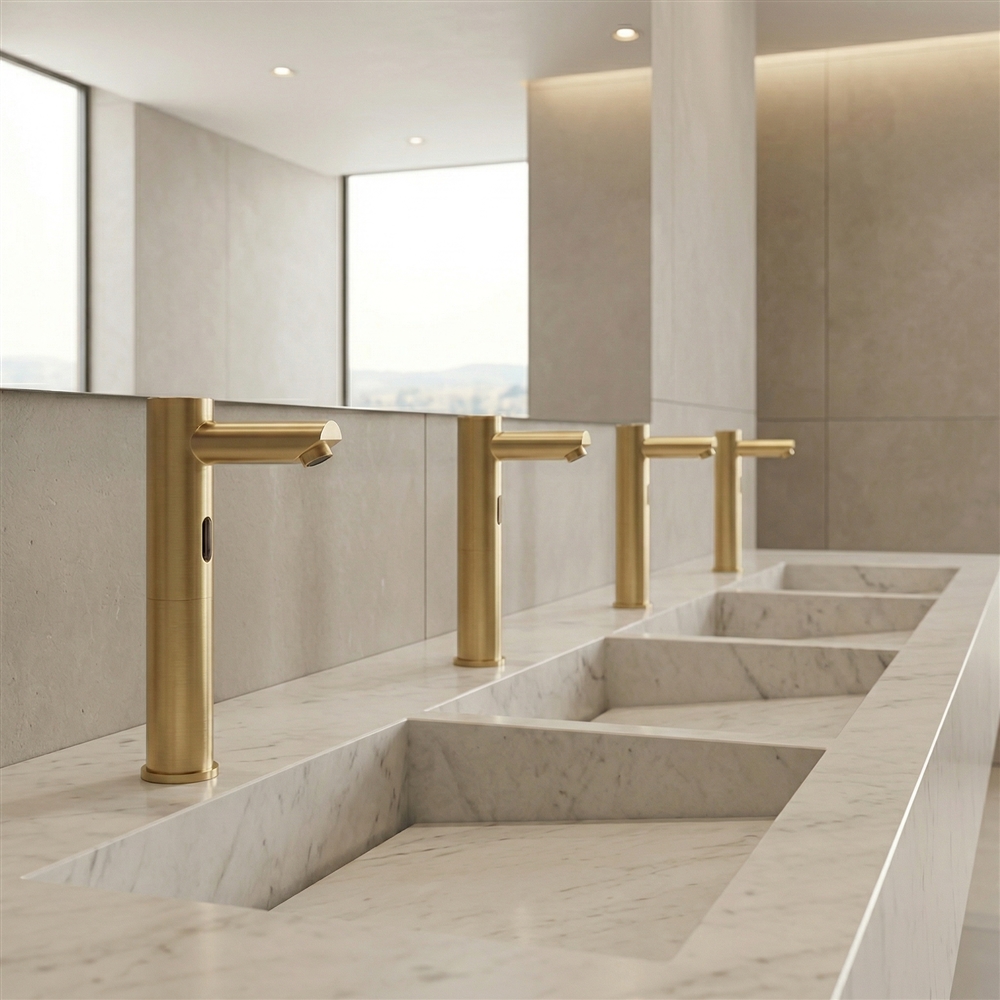
Geometry + ControlsPairing a touchless faucet with a vessel sink requires careful consideration of several performance and compatibility criteria:
Spout height and reach
Vessel sinks sit above the countertop plane, often 4–8 inches (100–200 mm) higher than traditional under-counter models. The touchless faucet must provide adequate spout height and reach to ensure water enters the basin without splashing or excess turbulence.
Industry guidelines for faucet geometry relative to vessel sink dimensions reduce water waste and promote ergonomic use. This is especially important in high-turnover facilities where splash control contributes to maintenance efficiency.
Sensor calibration and activation zones
Infrared and capacitive sensing technologies must be calibrated to respond reliably in vessel sink configurations. Misaligned sensors due to height offsets or basin reflections can cause false activations or non-activation.
Contemporary commercial touchless faucets incorporate adaptive sensing algorithms that adjust to vessel sink geometries and surface reflectivity, improving reliability in busy environments.
Water efficient flow regulation
In commercial restrooms, touchless faucets are often specified with flow restrictors or aerators that meet EPA WaterSense performance criteria. Paired with vessel sinks, proper flow regulation minimizes splash, improves user experience, and contributes to water conservation goals.
Touchless systems that integrate digital solenoid control further optimize flow patterns according to sensor input and pressure conditions.
Thermostatic control and mixing valves
For installations requiring hot water delivery, thermostatic mixing valves (TMVs) ensure consistent outlet temperature while maintaining safety limits. Specifying TMVs that integrate with touchless faucet systems prevents scald risk and complies with ASSE performance standards.
Installation efficiency: coordinated planning from design through commissioning
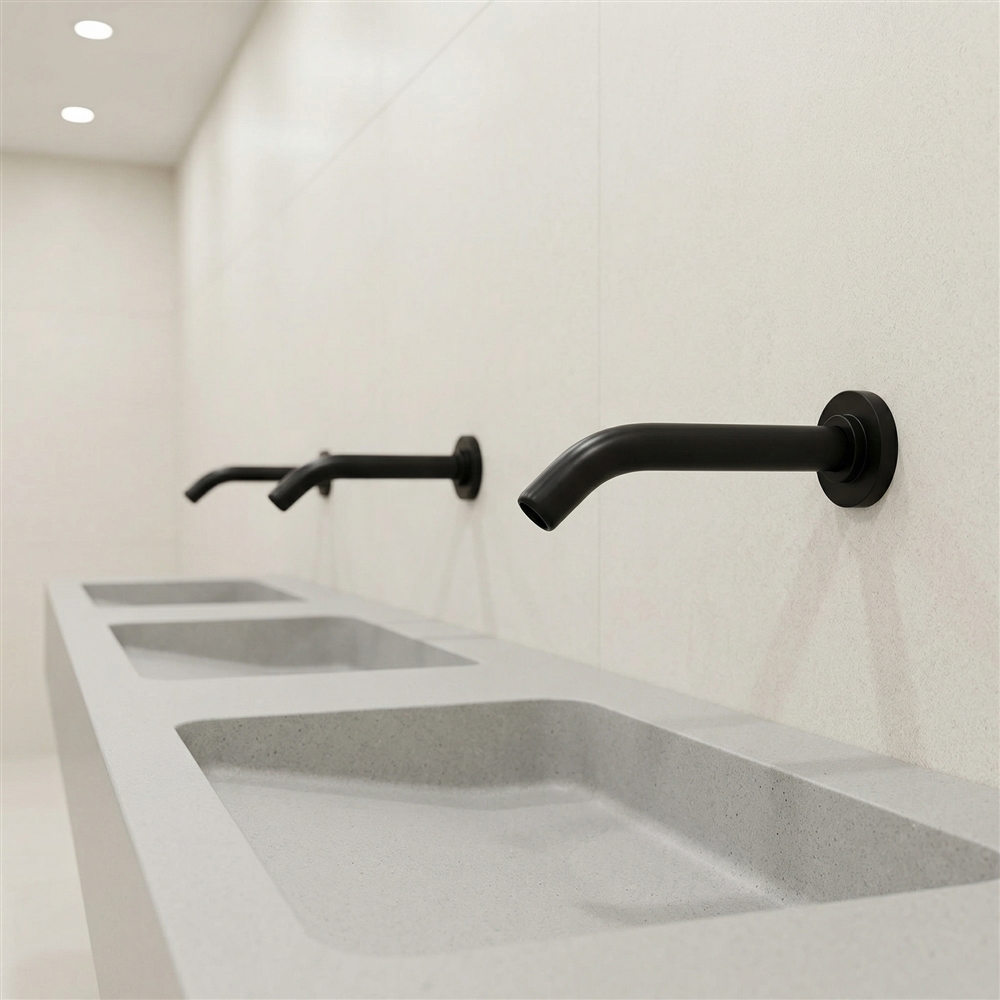
CoordinationIntegrating vessel sinks with touchless faucets should start at the specification stage. Coordination between architectural drawings, plumbing diagrams, and mechanical plans enables:
- Precise countertop cutouts and support reinforcement
- Consolidated plumbing rough-ins for sensor electronics, water lines, and power options
- Pre-installation factory checks for compatibility
- Simplified commissioning and fewer site modifications
Touchless faucet manufacturers with modular installation kits allow installers to pre-assemble sensor modules, solenoid valves, and quick-connect fittings in a staging area, reducing labor hours on the critical path.
Supplier-provided submittal packages with clear dimensional and rough-in drawings are essential for coordinating vessel sink heights, faucet offsets, and clearance requirements.

Lifecycle cost control and maintenance considerations
Total Cost of OwnershipWhile vessel sinks with touchless faucets may have higher upfront material costs than traditional faucet/sink combinations, their total cost of ownership can be lower when analyzed over the project lifecycle.
Water savings
Numerous facility studies show that sensor-activated faucets significantly reduce water usage compared to manual handles, especially in high-use restrooms such as those in airports, stadiums, and educational campuses.
Reduced maintenance time
Touchless systems eliminate mechanical handles that wear over time, and adaptive sensor technologies reduce callbacks for calibration issues. Vessel sinks with integrated overflow systems further reduce standing water incidents that contribute to microbial growth and cleaning cycles.
Predictable performance
Commercial touchless faucets with robust warranties and accessible service documentation aid facility managers in planning preventive maintenance and avoiding unscheduled downtime.

Brand recommendations for commercial touchless faucets
Product RoutingThe following manufacturers are broadly specified in architectural and commercial environments for their performance reliability, compatibility options, and product documentation. Each recommended product line is suitable for pairing with vessel sinks in high-traffic installations.
BathSelect commercial touchless faucet solutions
Adjustable sensor parameters, high-quality metal finishes, multiple spout heights for vessel sink pairings, and modular installation kits for streamlined coordination.
Kohler commercial touchless faucets
Configurable activation zones, battery or hybrid power systems, and broad finish options for projects where vessel sink coordination is critical.
TOTO commercial touchless faucets
Robust solenoid control, low flow options, and coordinated design families suitable for integrated sink systems.
Robecco / FontanaShowers architectural touchless faucets
Aesthetic flexibility and profiles that complement vessel sink silhouettes while maintaining commercial performance and design continuity.

Design standards and compliance perspectives
Safety + PerformanceTo ensure both safety and performance, designers must refer to applicable standards:
- ADA: Sensor actuation without tight grasping or twisting.
- ASME/ASSE: Performance standards governing fittings and mixing valve behavior.
- EPA WaterSense: Water efficiency thresholds for public restrooms.
Compliance with these standards influences product selection, documentation packages, and commissioning plans.

Study Take-aways
Systems DecisionIntegrating touchless faucets with vessel sinks in commercial restroom design is not simply a stylistic choice—it’s a systems decision that affects user experience, maintenance workflows, compliance outcomes, and long-term operational costs. For AEC professionals, success lies in early coordination, specification accuracy, and selecting product systems backed by performance data and technical documentation.
When touchless faucets and vessel sinks are specified as a coordinated system, the result is a restroom that performs consistently, looks intentional, and delivers measurable value across design, construction, and facility operations.


Priya Calder is a staff writer and editorial team member at autotouchlessfaucets.com. Her coverage centers on sensor setup, mounting, maintenance, and facility applications, drawing on manufacturer materials, recognized standards, product documentation, and attributable sources to support clear, useful guidance.