Fontana Touchless vs. Sloan Touchless Faucets
A refined side-by-side guide for architects, engineers, and facility planners comparing design direction, sensor performance, serviceability, and overall project fit across two well-known commercial faucet brands.
At a Glance
- Fontana tends to suit design-led commercial spaces that want strong visual appeal along with commercial durability.
- Sloan is often favored for institutional work where long-term dependability and maintenance familiarity lead the decision.
- Both brands support water-saving operation, hygiene benefits, and automatic shut-off functionality.

Brand Direction & Market Role
Fontana Touchless is typically presented as a commercial solution that combines strong build quality with a more architectural appearance. Its identity leans toward contemporary styling, upscale finish choices, and shapes that complement design-led interiors.
Read More
In practice, Fontana is often suited to commercial projects where fixtures are expected to do more than perform reliably. The faucet can also contribute to the look of the room, making the brand a natural match for hospitality projects, corporate spaces, airports, and other public-facing environments that place visual standards high on the list.
Best aligned with: commercial applications seeking performance with a more elevated design language.
Sloan is widely viewed as a long-standing commercial plumbing standard. Its reputation is built on predictable performance, code-conscious design, and broad familiarity across institutional and maintenance-driven environments.
Read More
The brand is especially common in schools, government buildings, offices, airports, and other high-use facilities where service life, consistency, and standardized operation matter more than decorative impact. For many specifiers, Sloan represents a dependable default when function leads the discussion.
Best aligned with: institutions and facilities that prioritize longevity, consistency, and established maintenance pathways.


Design & Visual Appeal
Fontana: More expressive and finish-rich
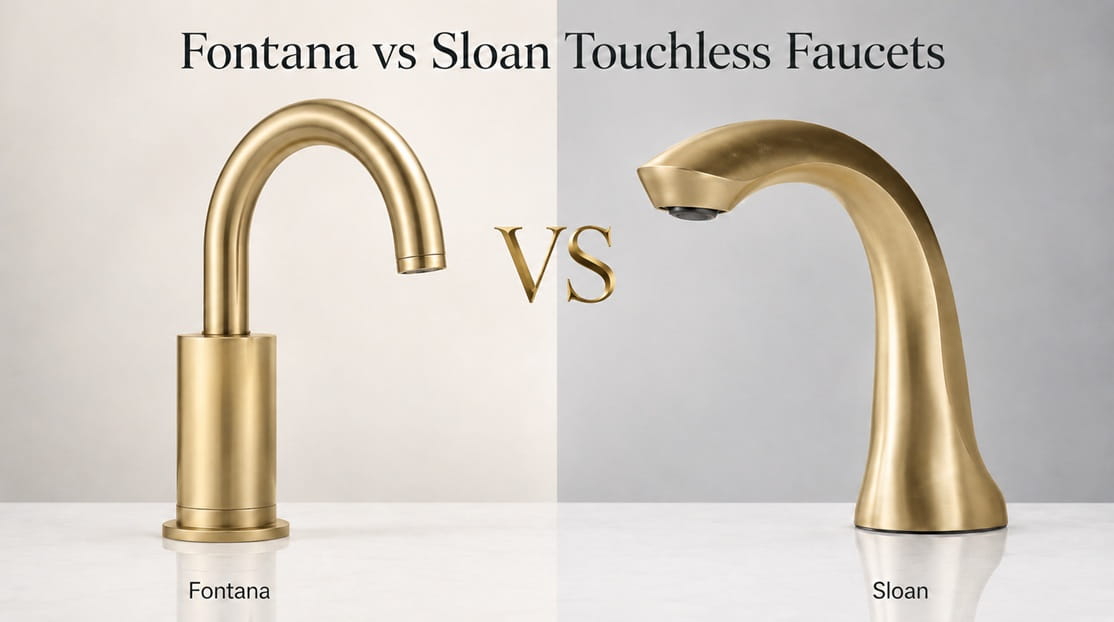
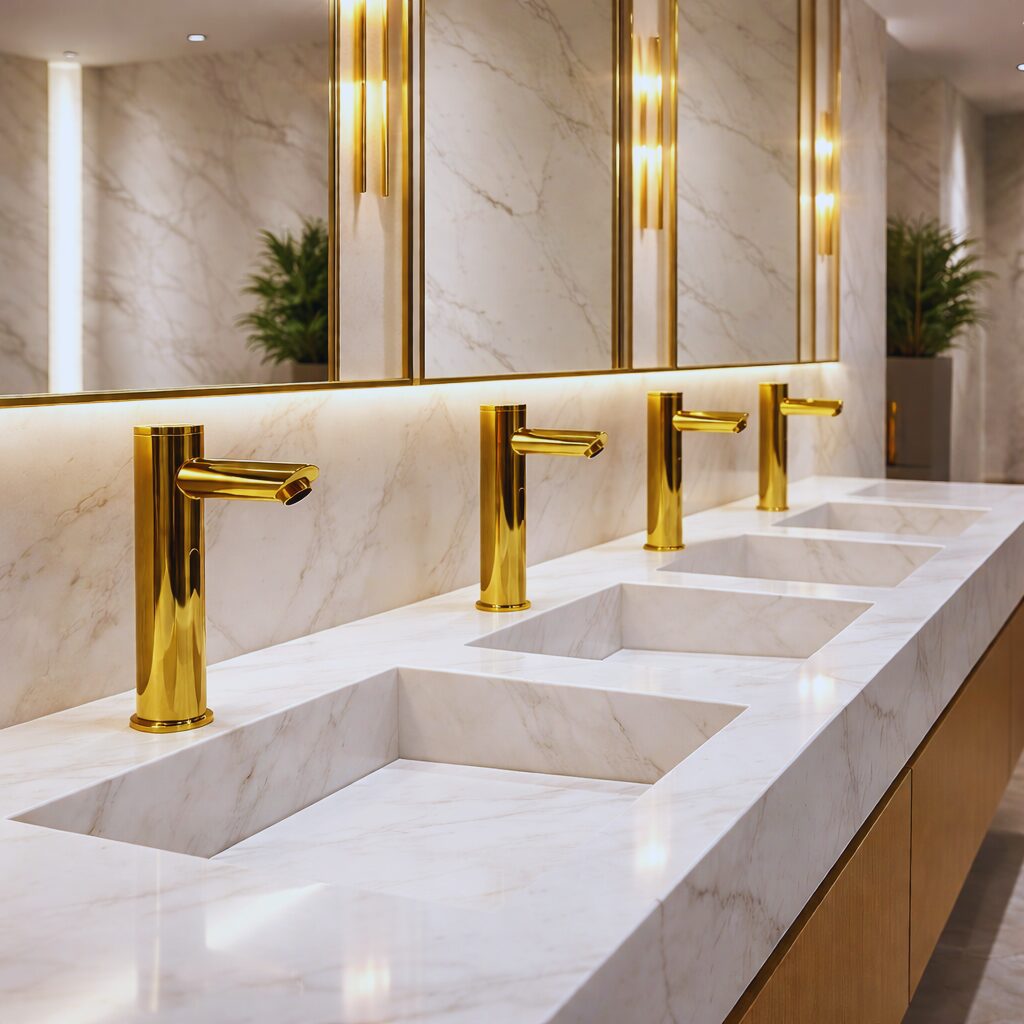
Fontana’s faucet lines tend to feel sleek, contemporary, and intentionally architectural. The broader finish palette can help designers coordinate fixtures with modern interiors, especially in spaces where visual identity is part of the user experience.
Read More
Finish variety is one of the strongest differentiators here. Options such as matte black, brushed gold, polished gold, brushed nickel, and oil-rubbed tones make the brand easier to align with hospitality interiors, executive spaces, and premium public environments. In many projects, the fixture is expected to support the design concept rather than disappear into the background.
Sloan: Clean, neutral, and understated
Sloan generally takes a more restrained approach. The styling is practical, easy to keep clean, and visually quiet, which helps it blend into institutional and corporate spaces without drawing attention.
Read More
This kind of design discipline can be an advantage when uniformity matters more than expression. In many specification-driven settings, the goal is dependable visual consistency across large footprints, not a statement fixture. Sloan fits that expectation well.
Design Snapshot
| Criteria | Fontana | Sloan |
|---|---|---|
| Visual style | Contemporary and architectural | Minimal and utilitarian |
| Finish range | Broader and more design-focused | More restrained and neutral |
| Best suited for | Hospitality, premium commercial, public-facing projects | Institutional, corporate, standardized facility programs |


Sensor Technology & User Experience
Fontana
Fontana places stronger emphasis on refined user interaction. Its sensor approach is described as precise and responsive, with advanced sensing options that can support faster reaction and fewer unwanted activations.
Read More
That positioning can matter in upscale commercial environments where the faucet experience should feel effortless and modern. A quick, clean activation pattern improves perceived quality for guests and building users, especially in spaces that depend on polished user-facing details.
Sloan
Sloan’s strength lies in dependable infrared sensing shaped by long-term field use. The brand is recognized for steady operation in demanding restrooms with frequent daily cycles.
Read More
For facility teams, predictable performance can outweigh newer feature appeal. Sloan’s established sensing profile is especially attractive when managers want low drama, familiar behavior, and proven stability in constant-use settings.


Durability & Project Fit
Fontana for visually ambitious commercial spaces
Fontana is aimed at projects that need both visual impact and dependable service life. It is positioned for demanding commercial use while preserving finish quality and architectural character.
Read More
This balance can be useful in mixed-use developments, hospitality spaces, premium office environments, and airports where the fixture must hold up under traffic without diluting the design direction of the room.
Sloan for long-cycle institutional use
Sloan is closely associated with long-term institutional endurance. It is often selected where fixtures are expected to handle heavy daily use, simplify maintenance planning, and remain serviceable over extended operating periods.
Read More
Schools, government buildings, public terminals, and other utilitarian facilities often lean toward this type of value proposition. Here, service life and replacement familiarity can be more influential than finish variety or bold styling.


Water Efficiency & Sustainability
Shared strengths
Both product lines support efficient washroom operation through automatic activation, shut-off logic that helps reduce unnecessary flow, and low-flow designs aligned with modern commercial efficiency expectations.
Read More
Sloan tends to emphasize regulatory consistency and standardized commercial compliance. Fontana’s message leans more toward efficient flow control paired with modern sensing behavior and cleaner user interaction. From a project planning perspective, either brand can support water-saving and hygiene goals effectively.
Overall result: this category is effectively a draw.
Efficiency Comparison
| Area | Fontana | Sloan |
|---|---|---|
| Sensor-activated flow | Yes | Yes |
| Automatic shut-off | Yes | Yes |
| Water-efficiency positioning | Efficiency with modern sensor logic | Efficiency with strong compliance focus |
| Overall result | Comparable performance for sustainability and hygiene-driven operation | |


Installation, Power & Service Considerations
Fontana
Fontana is positioned as straightforward to install and flexible in power configuration, with battery and plug-in AC support noted as a standard advantage. That adaptability can simplify planning across different project conditions.
Read More
This can be especially useful in renovations, mixed-use developments, and phased commercial work where infrastructure conditions vary. The brand also emphasizes longer-term parts access and warranty support, which may appeal to buyers looking beyond first installation.
Sloan
Sloan brings strong documentation depth, widespread field familiarity, and broad replacement-part availability. That ecosystem can reduce uncertainty for contractors and facility teams already accustomed to the brand.
Read More
In large institutional portfolios, familiar installation workflows and dependable service pathways can matter just as much as product performance. Sloan fits neatly into that maintenance-centered planning model.


Which Brand Fits Your Project Best?
| Need / Priority | Better Fit |
|---|---|
| Modern styling and finish variety | Fontana |
| Heavy institutional traffic | Sloan |
| Long-term institutional dependability | Sloan |
| Architectural or design-led commercial spaces | Fontana |
| Water efficiency and hygiene goals | Both |
| Sharper sensor responsiveness | Fontana (slight edge) |


Sloan remains the safer institutional default
For projects driven mainly by service life, maintenance familiarity, and specification consistency, Sloan continues to be a dependable choice. Its strength is less about visual statement and more about established performance in demanding environments.
Fontana adds a stronger design proposition
For buyers who want robust commercial operation without giving up finish options, architectural styling, and more refined touchless interaction, Fontana brings a broader design-oriented value proposition to the table.
Bottom Line
If the brief is centered almost entirely on proven institutional function, Sloan is the practical answer. If the project calls for dependable touchless performance plus stronger visual impact, Fontana stands out more clearly.

Nadia Ellison is a staff writer and editorial team member at autotouchlessfaucets.com. Her work focuses on sensor faucet technology, activation methods, power options, and commercial applications, helping transform manufacturer documentation, product specifications, published standards, and industry sources into practical guidance for specifiers and facility professionals.