
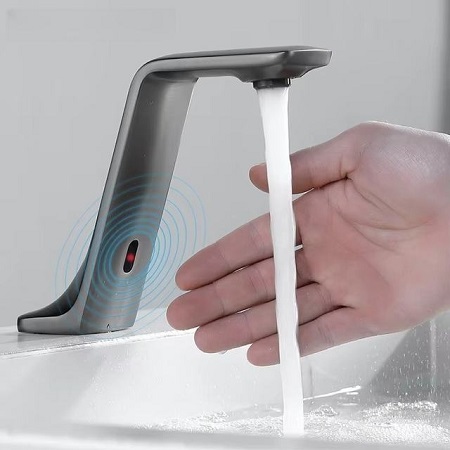
Executive summary: Between 2020 and 2030, the touchless (sensor/automatic) faucet category rapidly evolved from a niche hygiene feature into a mainstream building technology choice. This shift is especially relevant for CEOs evaluating facility upgrades, revisiting concession strategies, or investing in new product lines. During the pandemic, heightened public health concerns, measurable water and energy savings, and the growing availability of affordable, reliable sensor units all fueled demand. Market reports show steady multi-year growth, and many major players—both commercial and residential—are now moving toward sensor-first portfolios.. Grand View Research
What changed between 2020 and 2025
- Public-health imperative became business driver. The COVID-19 pandemic reframed “touchless” from a premium convenience to an infection-control measure in hospitals, airports, schools, and corporate campuses. Research and industry white papers documented accelerated adoption of contactless interactions—particularly in high-traffic public and healthcare settings—prompting procurement teams to prioritize sensor fixtures. PMC
- Products have reached maturity faster and become less expensive. During this period, suppliers improved sensor accuracy, reduced false activations, introduced battery and low-voltage options, and simplified installation. This lowered the total cost of deployment and made it easier to upgrade older washrooms—critical for facility managers seeking a fast return on investment (ROI).
- Water and maintenance savings turned into business cases. In commercial bathrooms, sensor faucets save water by automatically shutting off, controlling the flow, and letting you set the run times. Because water and utility costs are high, the time it takes to pay for replacements is shorter. Analysts in the industry and vendor case studies (see references) always say that many installations have cut their water use by double digits. Report Prime
Market sizing — what the numbers show

Between 2020 and 2025, multiple market reports indicate that the sensor/touchless faucet segment has been growing at mid- to high-single-digit CAGRs. Certain subsegments—such as touchless kitchen faucets and infrared sensor faucets—are expanding even more rapidly. While estimates vary across reports, they consistently agree that the market will continue to grow, driven by strong demand for retrofits in commercial buildings and rising interest in “smart” kitchens and bathrooms in residential spaces. I created a combined trend chart (estimate-based) for 2020–2030 that aggregates the available data. It should be used as a directional planning tool rather than a single-source forecast.
(Important: Individual paid market reports may show different dollar values. Be sure to obtain the report specific to your region or industry vertical before making any contract or investment decisions.)
Who adopted first — and where adoption scaled fastest
- Healthcare and eldercare — Early adoption was driven largely by infection control requirements, regulatory pressure, and clear reductions in cross-contamination risk. Hospitals, in particular, invested in data-capable faucets that integrate with hygiene monitoring systems. Oras Stories
- Airports, hospitality, and quick-service retail — put touchless fixtures at the top of the priority list to help customers feel safer and reduce their perceived risk. These industries also prefer commercial-grade units that are durable and require minimal maintenance. Hansa Stories
- Office and education retrofits — driven largely during the reopening phases, with adoption levels varying based on organizational size and willingness to invest.
- Residential — As smart home budgets expanded and consumers sought both convenience and cleanliness, touchless kitchen faucets gained significant popularity.
Barriers and real-world friction
- Perceived reliability and maintenance concerns. Early-generation units experienced issues such as sensor drift and short battery life, leading procurement teams to request MTBF data, uptime guarantees, and service agreements. In response, vendors introduced stronger warranties, replaceable power modules, and improved sensor algorithms.Report Prime
- Upfront cost vs. conservative CapEx cycles. In many cases involving the public sector and small businesses, line-item capital constraints made rollouts take longer, even though the lifecycle ROI was good.
- Plumbing and retrofit complexity. Sometimes older bathrooms required new valves or modifications to the deck. Turnkey installation services helped differentiate vendors in these cases.

Strategic implications
- Facility operators: Prioritize high-traffic and high-risk locations—such as hospitals, airports, and food courts—for staged rollouts. These environments offer the greatest hygiene and reputational benefits, along with the shortest payback periods. Vendors that provide analytics or preventive maintenance contracts as part of a bundled package can further reduce total cost of ownership. Oras Stories
- Hospitality & retail brand leaders: Use touchless upgrades as a visible way to build customer trust in high-exposure areas. Pilot premium sensor faucets in your flagship locations to gauge customer response and measure their impact on overall business performance.
- Manufacturers & suppliers: The market favors designs that are modular, easy to service, and enhanced with value-added features such as data telemetry, flow analytics, and antimicrobial finishes. If you’re planning product roadmaps, prioritize robust sensor calibration, flexible battery/low-voltage power options, and simplified retrofit kits—these elements significantly increase adoption rates.
- Procurement & sustainability teams:Quantify water, energy, and maintenance savings per site, and normalize them against region-specific utility costs. Utility rebates or water-saving incentives often have a substantial impact on a project’s IRR, so be sure to incorporate them into your procurement models. Report Prime
Quick ROI checklist for pilots (operational)
- Baseline daily/weekly water consumption per restroom cluster.
- Average daily users (peak vs. off-peak).
- Utility cost per cubic metre and local water rebates.
- Installation scope (retrofit vs. new-build) and average downtime.
- Maintenance contract options (sensor recalibration, battery replacement).
Takeaway for executives
The touchless faucet market evolved from an urgent pandemic response into a well-established category with clear operational and reputational benefits between 2020 and 2030. Steady growth is expected to continue. The companies that (a) simplify installation, (b) price for lifecycle value rather than just hardware, and (c) integrate hygiene fixtures into their broader facility and sustainability strategies will come out ahead. For conservative capital planning, start with a small pilot in your most visible or heavily used facilities, and use measured water and maintenance data to justify larger rollouts. Grand View Research
Key references (select reports & research)
- Grand View Research — Smart Faucets market overview and drivers. Grand View Research
- ReportPrime / Market summaries — sensor/automatic faucet forecasts and CAGR discussion. Report Prime
- PMC / NCBI — review on acceleration of touchless interaction technologies during COVID-19. PMC
- MDPI — COVID-19 impact on IoT adoption in healthcare (context for data-capable faucets). MDPI
- Industry/retailer product pages (example commercial units: Kohler, Home Depot listings).
Market Growth & Commercial Adoption Resources
The rapid adoption of automatic touchless faucets between 2020 and 2030 has been influenced by changing hygiene expectations, commercial construction, water conservation initiatives, and advances in sensor technology. The resources below provide additional market perspectives.
-
Studies on Touchless Faucets
Research discussing commercial adoption, hygiene trends and sensor faucet performance. -
Commercial Touchless Washroom Solutions
Overview of integrated touchless restroom technologies for modern commercial buildings. -
Commercial Touchless Collection
Highlights evolving commercial touchless restroom technologies and applications. -
Commercial Adoption Growth Trends (2020–2030)
Examines factors driving increased touchless faucet adoption across commercial facilities. -
LEED Green Building
Promotes efficient building practices that encourage water-saving plumbing technologies. -
EPA WaterSense
Water-efficiency guidance supporting modern commercial plumbing fixture selection. -
International Facility Management Association
Facility management resources covering commercial building operations and maintenance. -
Building Owners and Managers Association
Commercial real estate organization supporting efficient building operations.
Technology Innovation & Consumer Adoption
Improved sensor accuracy, lower maintenance requirements and greater user confidence have accelerated the acceptance of automatic faucets across commercial and institutional environments.
-
Commercial Touchless Bathroom Faucets
Commercial sensor faucets designed for demanding public environments. -
Commercial Touchless Performance Study
Reviews performance expectations for commercial touchless faucet systems. -
Commercial Touchless Restroom Fixtures
Explains technology developments driving modern restroom design. -
Time-of-Flight Sensor Technology
Overview of advanced sensing technologies improving faucet reliability. -
American Society of Plumbing Engineers
Commercial plumbing engineering standards and technical guidance. -
ASTM International
Engineering standards supporting product quality and durability. -
ANSI
Consensus standards supporting commercial plumbing products. -
NSF
Independent certification focused on public health and product safety.
Commercial Construction & Industry Demand
Demand for automatic touchless faucets has expanded across healthcare, airports, hospitality, education, offices and public infrastructure as owners prioritize hygiene and lifecycle value.
-
Commercial Industry Applications
Examples of touchless fixture installations across multiple commercial sectors. -
Architect & Specifier Resources
Technical documentation supporting commercial specification projects. -
How Commercial Fixtures Are Specified
Discusses evaluation criteria used by design professionals. -
Infrastructure-Scale Performance
Selection considerations for major commercial infrastructure projects. -
Gensler
Global architecture firm delivering commercial and institutional projects. -
AECOM
Worldwide infrastructure and commercial engineering consultancy. -
ARCAT
Building specifications, CAD files and BIM resources. -
BIMobject
Digital BIM content supporting AEC professionals.
Market Trends, Sustainability & Future Outlook
Beyond hygiene, the market continues to evolve through sustainability initiatives, smart building integration, water conservation and lifecycle cost optimization.
-
Commercial Touchless Technology Studies
Research examining long-term operational performance in public facilities. -
Commercial Product Collection
Wide range of commercial touchless restroom solutions for specification projects. -
Return on Investment of Touchless Systems
Reviews operational savings across commercial facility types. -
Technical Study Reference
Engineering resources covering commercial touchless technologies. -
WELL Building Standard
Certification promoting healthier indoor environments. -
International Living Future Institute
Resources supporting regenerative and sustainable building practices. -
Buildings.com
Industry insights covering commercial building operations and technology. -
FacilitiesNet
Facility management news covering maintenance, operations and infrastructure.

Market Growth & Consumer Adoption of Auto Touchless Faucets (2020–2030)
The global adoption of automatic touchless faucets has accelerated across commercial facilities as organizations continue investing in hygiene, water conservation, sustainability, and smart building technologies. Airports, healthcare facilities, office buildings, educational campuses, hospitality projects, and public infrastructure are increasingly specifying sensor-operated faucets as standard restroom equipment rather than optional upgrades. :contentReference[oaicite:0]{index=0}
Long-term market growth is also being supported by advances in sensor technology, improved reliability, stricter water-efficiency regulations, and increased investment in smart commercial buildings. As facility owners seek lower operating costs and improved user experiences, commercial touchless faucets continue to see broader adoption worldwide. :contentReference[oaicite:1]{index=1}
Commercial Products Supporting Future Market Growth

Fontana Commercial Building Touchless Faucet
Designed for high-traffic commercial facilities, this sensor faucet supports modern restroom design strategies focused on hygiene, efficient water use, and simplified maintenance planning for public infrastructure projects.
View Product
Automatic Sensor Faucet & Soap Dispenser System
Integrated handwashing stations continue to experience strong commercial demand because they improve user flow, reduce contact points, and create coordinated restroom solutions for airports, healthcare, stadiums, and office developments.
View Product
Nadia Ellison is a staff writer and editorial team member at autotouchlessfaucets.com. Her work focuses on sensor faucet technology, activation methods, power options, and commercial applications, helping transform manufacturer documentation, product specifications, published standards, and industry sources into practical guidance for specifiers and facility professionals.