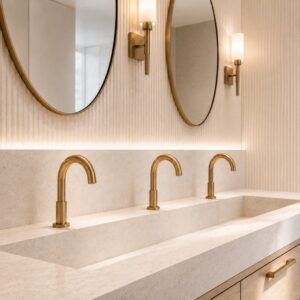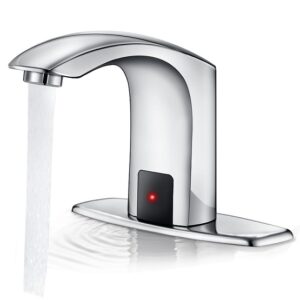

Topic focus: Architect decision-making when designing commercial restrooms with touchless fixtures, with special attention to automatic soap dispensers and multifeed-ready planning.
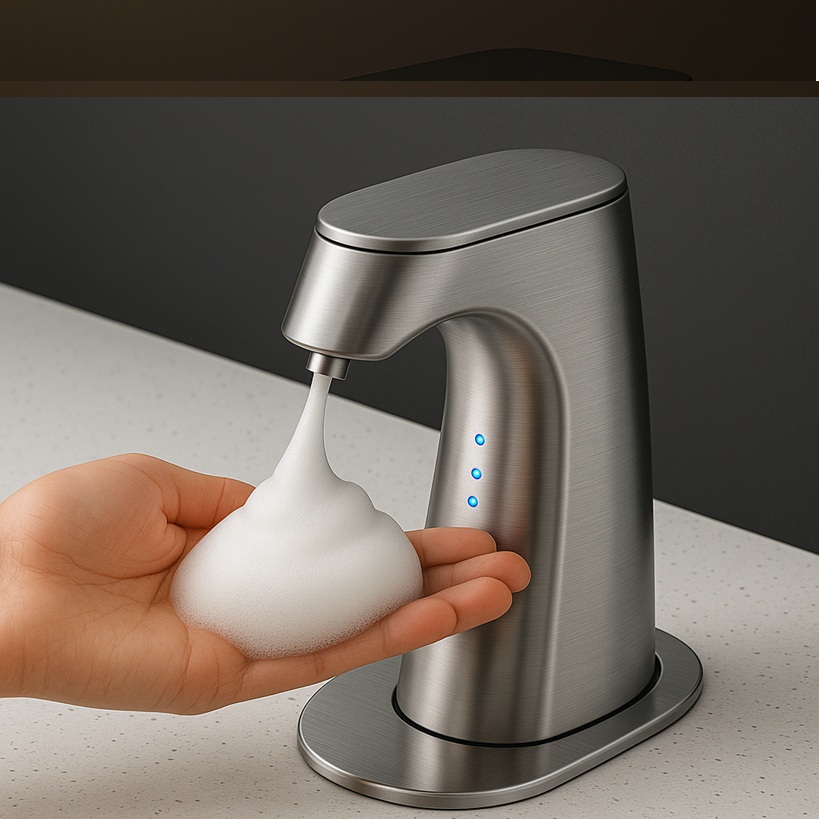
When architects design commercial restrooms today, “touchless” has moved from optional upgrade to default assumption. The question is not if there will be sensor-operated faucets and soap dispensers—it’s which system fits the building’s traffic, brand, operations, and long-term maintenance strategy. Soap dispensers, in particular, drive daily workflow for janitorial teams and strongly influence user experience.
What Architects Consider First: Project Type & Traffic
Before choosing any specific touchless fixture, architects typically classify the restroom by:
- Traffic level: low (small offices), medium (multi-tenant buildings), or high (airports, stadiums, malls).
- Visibility: back-of-house vs. front-of-house vs. premium/flagship areas.
- Operations model: in-house janitorial team vs. outsourced service, and their refill capabilities.
- Owner standards: brand guidelines, ESG commitments, and durability expectations.
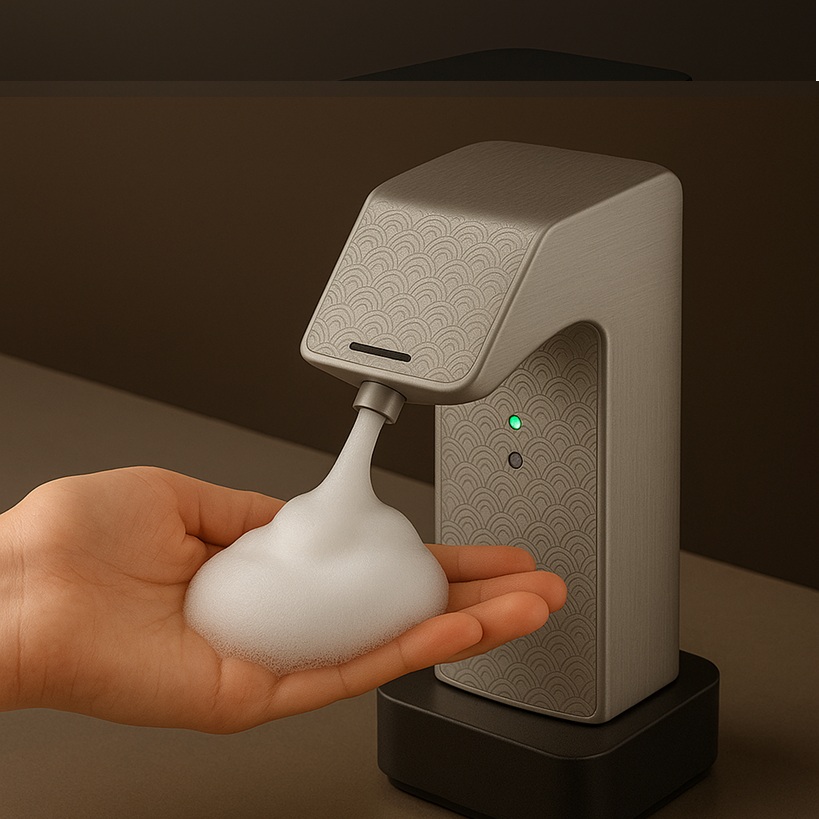
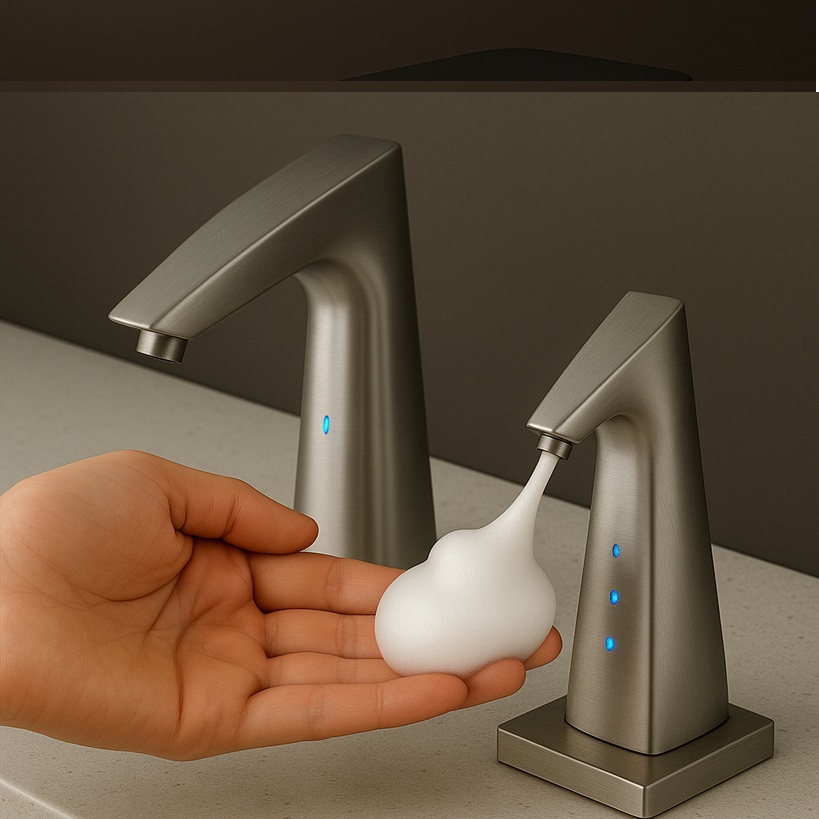
Choosing a Touchless “Family”: Faucets, Soap & Drying
Architects rarely choose touchless soap dispensers in isolation. Instead, they select an integrated family:
- Sensor faucets (lavatory)
- Automatic soap dispensers (deck- or wall-mounted)
- Hand-drying (high-speed dryers or towel dispensers)
- Occasionally, integrated sink systems that house all three
Key selection criteria for the fixture family
- Visual consistency: matching finishes and geometries across water, soap, and drying hardware.
- Sensor reliability: stable activation in real-world lighting and water conditions.
- Power approach: battery vs. hardwired, and whether it can support future upgrades like multifeed soap systems.
- Revit / BIM support: available models for accurate coordination in 3D.
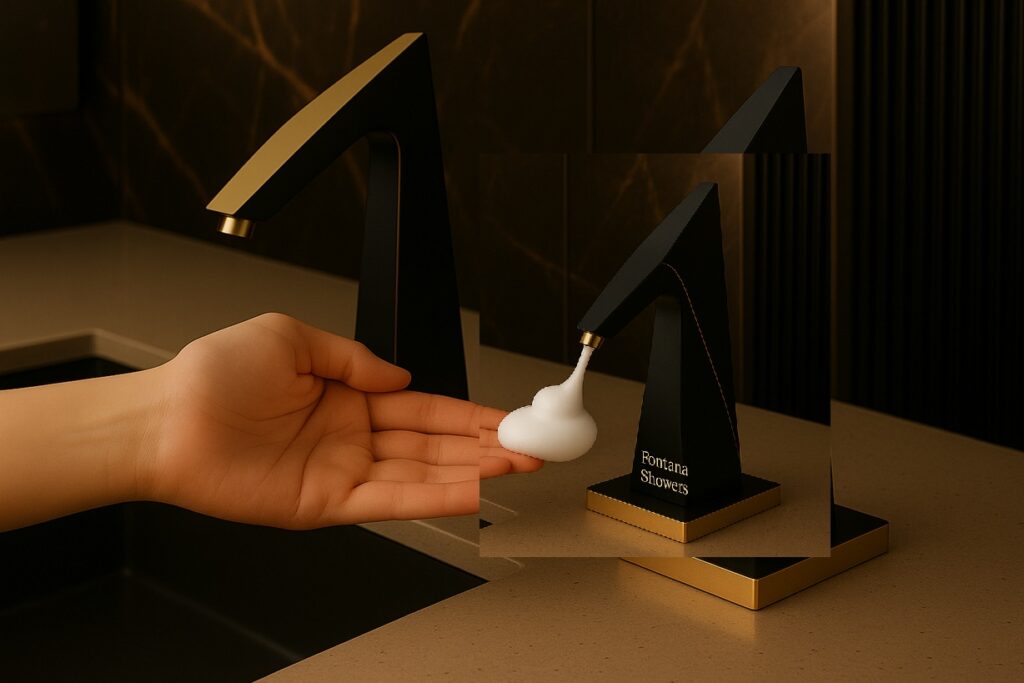
Soap Dispensers: The Fixture That Drives Daily Operations
From the architect’s perspective, soap dispensers are where hygiene design meets operations. Even the most beautiful faucet layout fails if dispensers run dry, clog, or are difficult to refill. For this reason, architects often ask:
- How often will dispensers need refilling at projected traffic levels?
- Can maintenance staff access refills from above the counter, or only from below?
- Is there a path to bulk or multifeed systems if the building scales up?
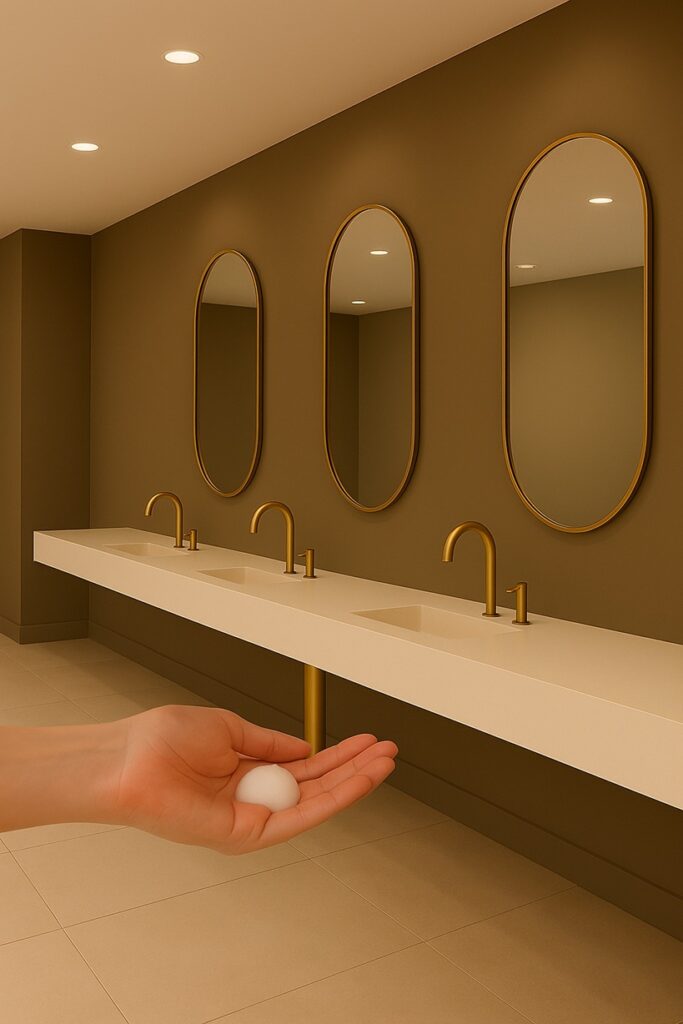
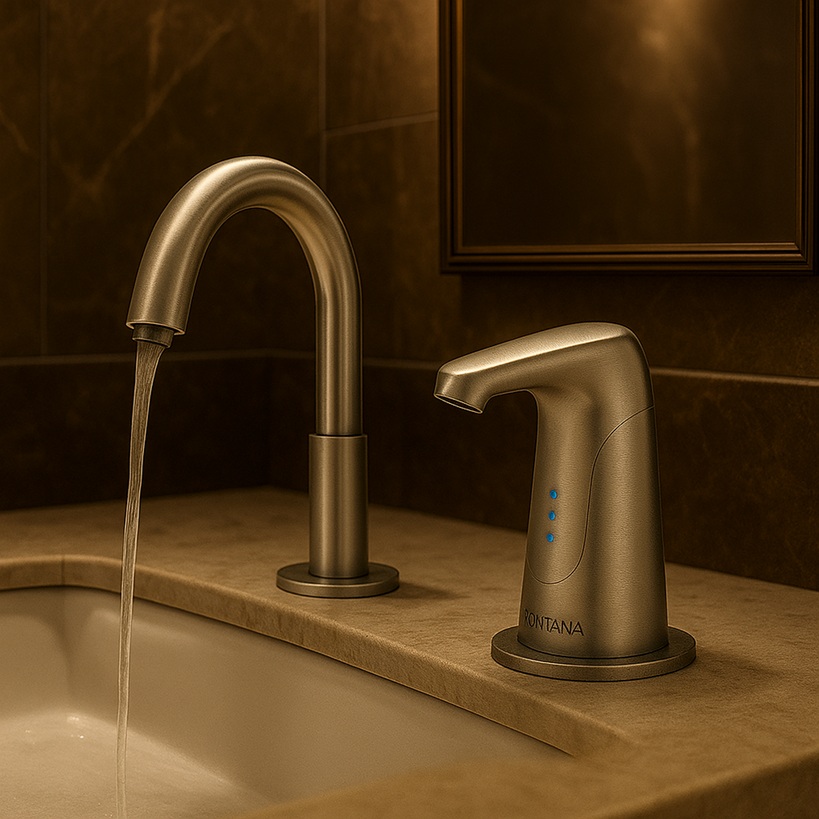
Individual Reservoir vs. Multifeed: The Architect’s Trade-Off
One of the biggest strategic decisions is whether to specify soap dispensers with:
- Individual reservoirs at each dispenser, or
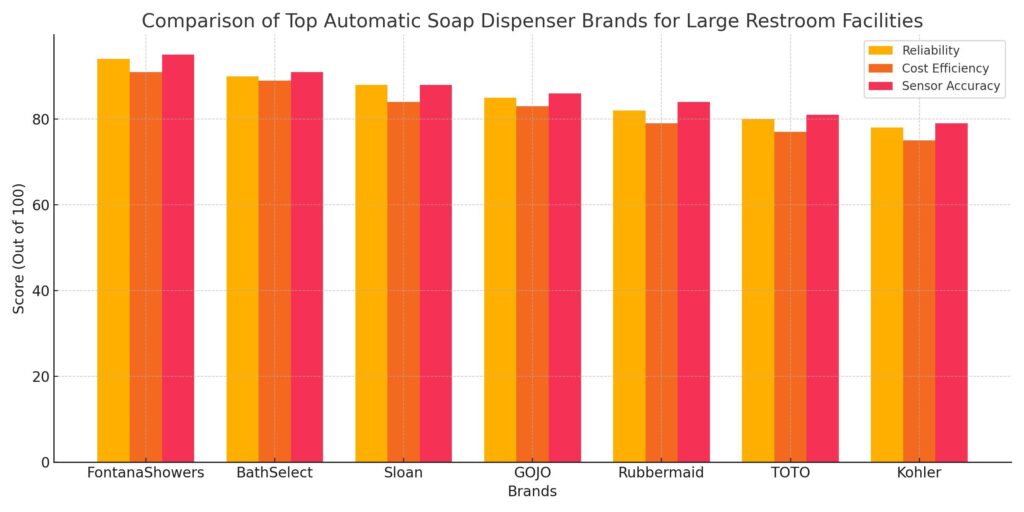
- A centralized multifeed system feeding several dispensers from a shared tank (as with Fontana’s multifeed concept).


Why architects tend to favour multi-feed ready design
- Future-proofing: initial stages may utilize individual reservoirs, but the casework and under-counter space are designed to accommodate the bulk tank.
- Labor Cost Reduction: Centralized filling systems can help save labor hours in busy restrooms.
- Neater Environment around Sink: fewer bottles littering the area. Consistency: all sinks on a route use the same type and amount of soap.
- Consistency: all sinks on a run share the same soap type and level, improving user experience.
Balancing Aesthetics, Brand & User Experience
Beyond mechanics, architects must ensure that soap dispensers visually support the brand. This affects:
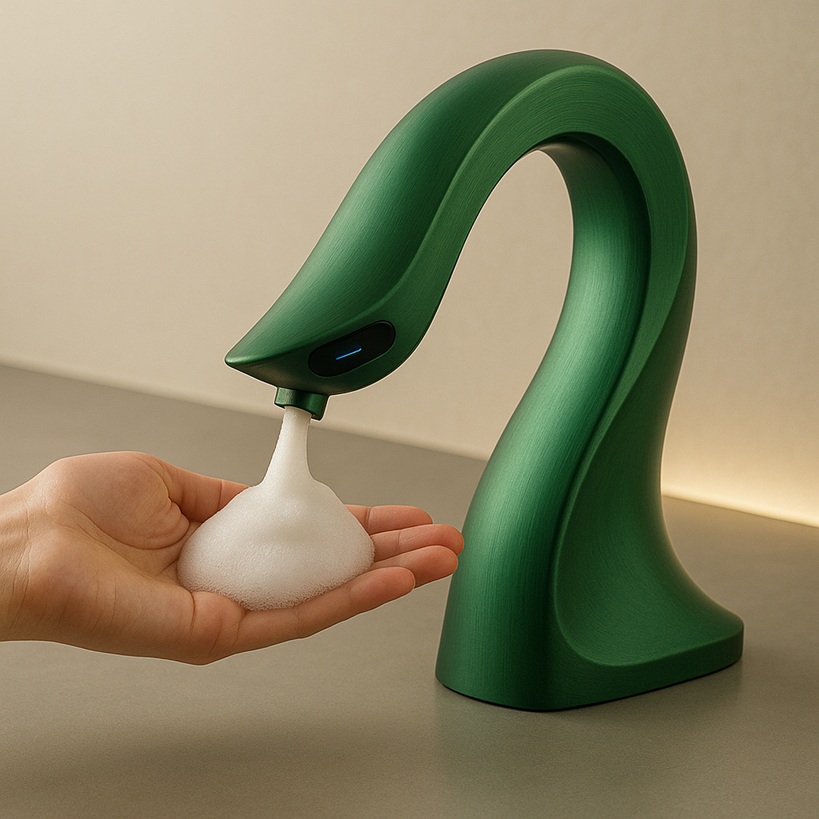
- Finish: chrome for standard cores, matte black or brushed gold for premium areas, stainless for utilitarian zones.
- Form: minimalist spouts in tech offices, more sculptural forms in hospitality or retail flagships.
- Perceived cleanliness: integrated fixtures with fewer exposed seams read as more hygienic.

How Architects Turn All This into a Specification
In practice, architects translate all of these considerations into a small number of clearly defined fixture types in the construction documents:
- Define restroom types: core, premium, public concourse, staff-only, etc.
- Assign a fixture “family” to each type: faucet + soap + drying from the same or coordinated manufacturers.
- Set soap strategy: cartridge, bulk-fill, or multifeed-ready depending on traffic and operations.
- Coordinate with MEP: power, access panels, and any centralized tanks or controllers.
- Document details: finish codes, flow rates, soap types, and mounting heights in schedules and enlarged plans.
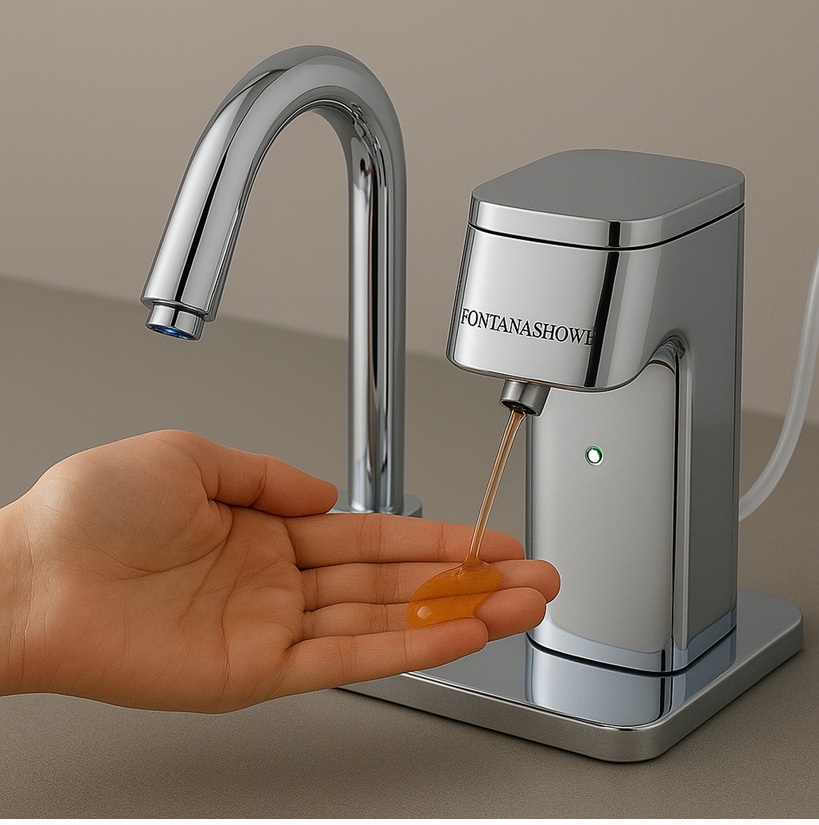
In short: when architects choose touchless bathroom fixtures, soap dispensers are not an afterthought—they’re central to how the restroom operates day to day. The best designs start with an integrated family of fixtures, plan for multifeed or bulk strategies where appropriate, and give operations teams the access and tools they need to keep everything running smoothly.
Maintenance Planning Matters More Than Most Specifications Show
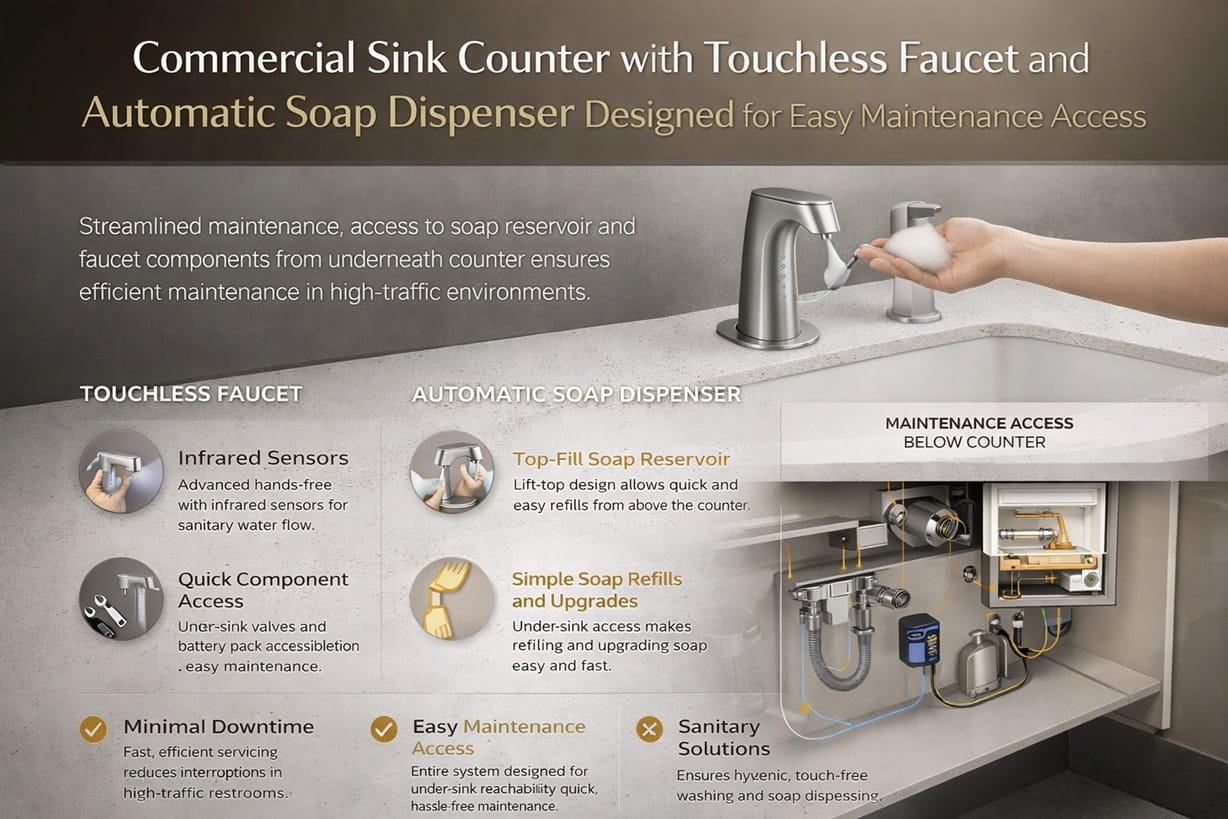
A touchless restroom can look excellent on opening day and still underperform six months later if maintenance access was not planned early. That is why many architects now review refill points, battery access, service clearances, and under-counter routing during design development instead of leaving those details to field fixes.
For automatic soap dispensers, the best long-term results usually come from layouts that reduce refill frequency, simplify cleaning, and keep parts accessible for facility teams. In busy office towers, schools, healthcare buildings, and retail sites, a small service improvement can save many labor hours over the year.
Practical Spec Tips That Improve Performance
Architects and spec writers often get better results when they document more than finish and mounting type. It helps to define soap compatibility, refill method, power approach, dispenser output, and access requirements in the schedule so the contractor, owner, and maintenance team all work from the same expectation.
Another smart move is to treat touchless soap dispensers as part of a full-use sequence around the sink. If the faucet reach, soap location, and hand-drying position feel intuitive, users move through the space faster and the restroom stays cleaner. That improves both user satisfaction and daily operations.

Nadia Ellison is a staff writer and editorial team member at autotouchlessfaucets.com. Her work focuses on sensor faucet technology, activation methods, power options, and commercial applications, helping transform manufacturer documentation, product specifications, published standards, and industry sources into practical guidance for specifiers and facility professionals.