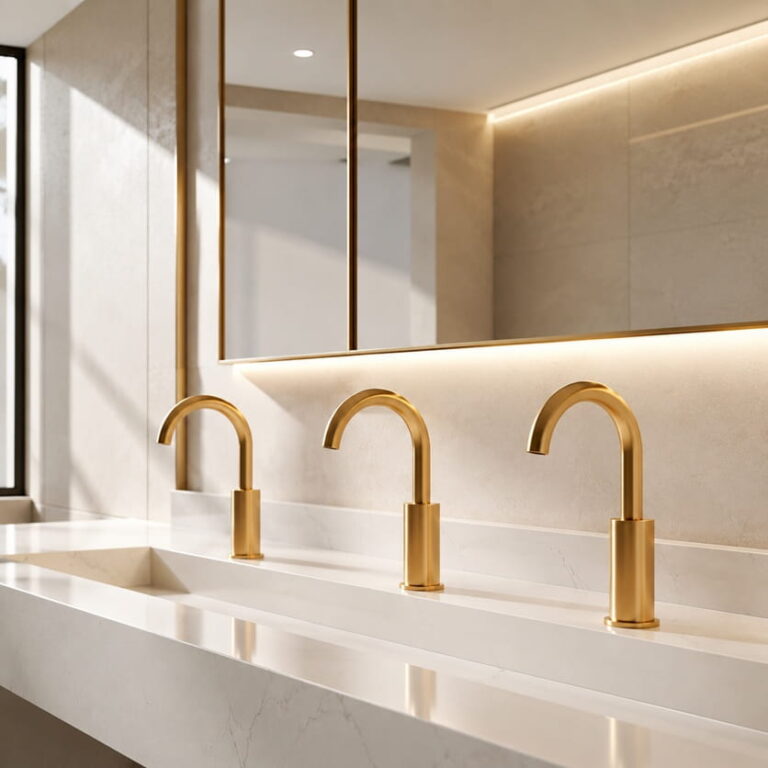

A practical checklist covering function, cleanliness, accessibility, sustainability, and ease of maintenance.
Introduction
When planning office restrooms, you can’t simply pursue looks—you’ve got to consider the way human beings use these spaces every day. Function, cleanliness, environmental sustainability, accessibility, appearance, and ease of cleaning all factor into the grand scheme. Here’s a simple step-by-step guide for making restrooms in contemporary commercial office buildings:

Office Restroom Architectural Essentials
1. Traffic Pattern and Layout
- Determine the number of individuals using the restroom (consider office population and peak periods).
- Optimize layout—easy in and easy out (divided corridors for stalls and sinks works).
- You have to have sufficient stalls. Guessing doesn’t cut it—use the International Plumbing Code (IPC) or your local code.
Tips:
- Consider the inclusion of gender-neutral restrooms with solid partitioned privacy.
- Place urinals and toilets in quiet, insulated spaces to reduce noise.
2. Touchless and Hygienic Fixtures
- Use auto-flush toilets, touchless faucets, and soap dispensers. Hygiene and the spread of something being prevented is a huge advantage.
- Use sensors (infrared or capacative) which are capable of handling a never-ending flow of people.
Recommended Products:
- A branded or commercial product like FontanaShowers or Sloan is built to last in a commercial context.
- Soap and towel dispensers that are fixed on walls and recessed towel dispensers promote cleanliness.
3. Material Strength & Sanitability
- Use materials that are resilient to abuse:
- Moisture-resistant material (Solid phenolic partitions, Porcelain tile).
- Anti-microbial, wipe-down counters (quartz) and floors (epoxy).
Wall & Floor Finishes:
- Use slip-resistant flooring with a gentle slope for drainage.
- Avoid porous grout or painted drywall in splash zones.

Ventilation, Compliance, and Long-Term Performance
4. Ventilation & Odor Control
- Get exhaust systems that actually work, with enough air changes per hour (ASHRAE says 10 for public restrooms).
- Consider motion-activated fans and air freshener systems to keep things fresh.
5. Accessibility & ADA Compliance
- Make sure you’re fully ADA compliant:
- 60-inch turning radius.
- Grab bars at proper height.
- Accessible sinks and mirrors.
- At least one ADA stall in every restroom.
6. Water & Energy Efficiency
- Go for WaterSense-certified:
- Faucets (0.5 GPM or less)
- Toilets (1.28 GPF or less)
- Urinals (0.125 GPF or waterless)
- Use daylight sensors and LEDs to save energy.
7. Privacy and Acoustics
- Use full-height partitions or doors for more privacy.
- Add sound-absorbing ceilings or panels to reduce noise.
8. Maintenance & Access Panels
- Provide back-of-house access behind walls and mirrors for plumbing and electrical maintenance.
- Utilize vandal-resistant, lockable flush valves and dispensers.
9. Gender Inclusivity & Modern Needs
- Provide unisex or family restrooms where feasible.
- Add nursing or wellness stations in proximity.
10. Aesthetic Integration
- Line up restroom finishes with the remainder of the office:
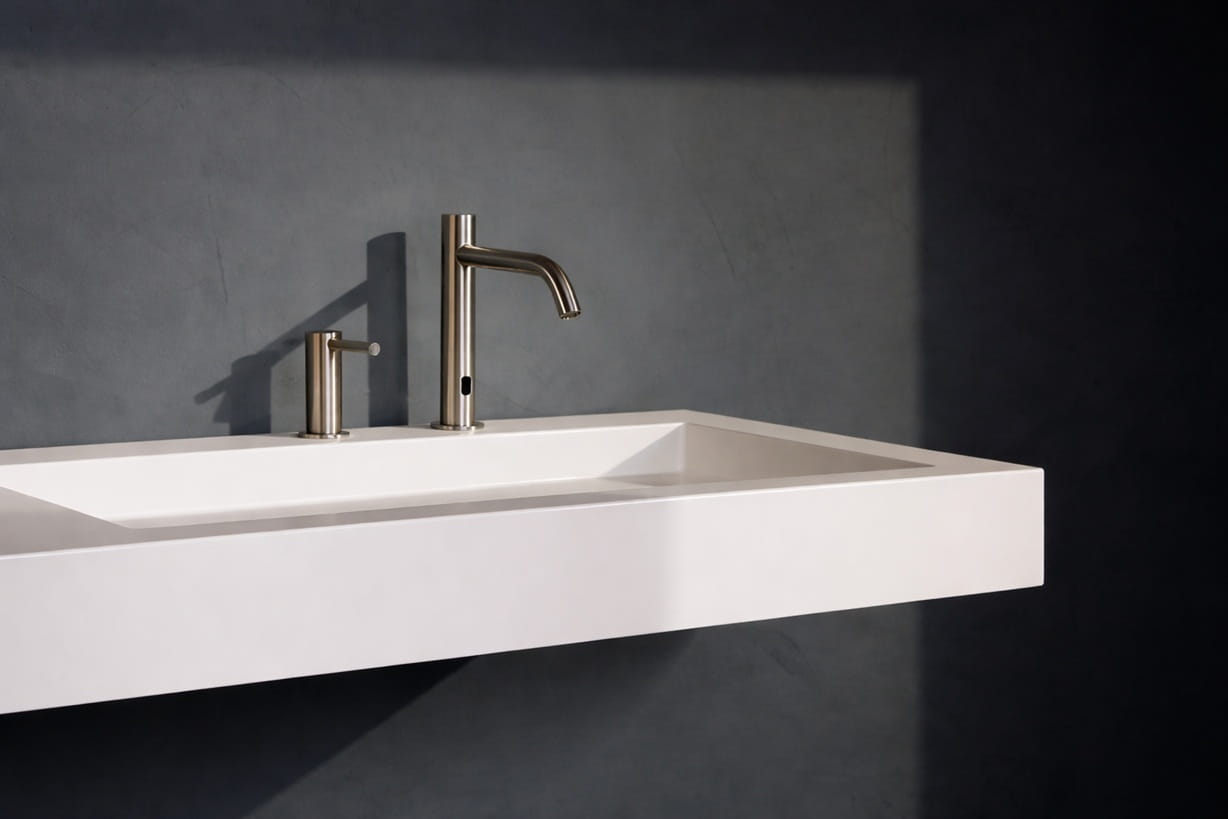
- Matte black fixtures for sleek, modern, high-tech appeal, brushed steel for a geek-chic look, wood for health-conscious spaces.
- Branded colors or signage to let the world see the company’s aesthetic.
Summary Checklist for Architects
| Area | Key Requirement |
|---|---|
| Space Planning | Flow, stall count, corridor buffer zones |
| Fixtures | Touchless, ADA-compliant, vandal-resistant |
| Materials | Anti-microbial, durable, non-slip |
| Water Use | Low-flow, sensor-activated, water-efficient |
| Lighting/Vent | LED, motion-sensor, good airflow (10 ACH) |
| Hygiene & Safety | Auto soap, paper/towel disposal, odor control |
| Accessibility | ADA stalls, reach ranges, signage |
| Acoustics | Privacy partitions, acoustic tiles |
| Maintenance | Access panels, ease of refills |
Why office restroom design now starts with user experience and long-term upkeep
Modern office restroom design is no longer just about meeting code minimums. For architects, property managers, and workplace teams, a successful restroom has to support daily traffic flow, reduce touchpoints, simplify maintenance, and still feel aligned with the building’s overall design language. That is why layout, material durability, touchless fixtures, ventilation, and accessibility now need to be planned together rather than treated as separate decisions.
In practice, the best office restroom designs are the ones that perform well over time. Durable finishes, easy-to-clean surfaces, efficient water use, and service-friendly access all help reduce operational issues after turnover. When these practical elements are combined with thoughtful privacy, acoustics, and visual consistency, the restroom becomes a stronger part of the overall workplace experience instead of just a back-of-house necessity.
Final Thoughts
Designing a restroom in an office complex has come to be more than just about form—it must quantify efficiency, wellness, cleanliness, inclusivity, and design compatibility with the workspace brand identity.

Nadia Ellison is a staff writer and editorial team member at autotouchlessfaucets.com. Her work focuses on sensor faucet technology, activation methods, power options, and commercial applications, helping transform manufacturer documentation, product specifications, published standards, and industry sources into practical guidance for specifiers and facility professionals.