
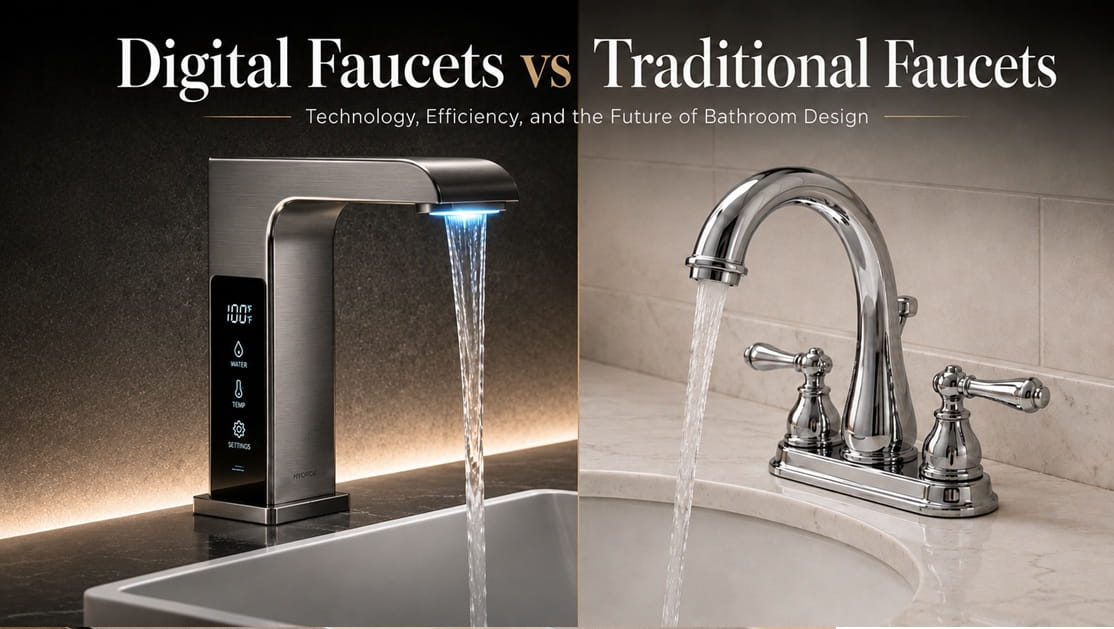
Digital Faucets vs Traditional Faucets: Technology, Efficiency, and the Future of Bathroom Design
Category: Bathroom Technology & Smart Plumbing
Author: Modern Bathroom Technology Editorial Team
Updated: 2026
Bathroom fixtures have evolved significantly over the past several decades. While traditional faucets once dominated residential and commercial plumbing systems, modern advancements have introduced a new category of fixtures known as digital faucets. These technologically advanced systems integrate sensors, digital temperature control, and automated water management to improve both convenience and efficiency.
Today, manufacturers such as Kohler, Delta, Moen, FontanaShowers, and JunoShowers are investing heavily in research and development to create intelligent bathroom fixtures designed for the modern home and commercial environment.
Understanding the differences between traditional faucets and digital faucets can help homeowners, architects, and property managers make better decisions when upgrading bathroom systems.
The History of Traditional Faucets
Traditional faucets have existed in various forms for more than a century. Early designs used simple mechanical valves controlled by rotating handles or knobs. These fixtures relied entirely on manual operation and provided basic water flow control.
Over time, manufacturers improved faucet materials, introduced ceramic valve technology, and enhanced durability. Despite these improvements, the fundamental operation of traditional faucets has remained largely unchanged.
Traditional faucets typically include the following components:
- Manual handles or knobs
- Compression or ceramic disc valves
- Hot and cold water mixing
- Mechanical water flow control
While these fixtures remain widely used due to their simplicity and affordability, they lack many of the advanced features offered by modern digital faucets.
What Are Digital Faucets?
Digital faucets represent the next stage in plumbing technology. These fixtures combine sensor technology, electronic controls, and thermostatic systems to create a smarter and more efficient faucet.
Rather than relying solely on mechanical handles, digital faucets use electronic sensors or touch controls to activate water flow.
Typical features of a digital faucet include:
- Motion sensor activation
- Touch or digital interface control
- Thermostatic temperature regulation
- Automatic shutoff
- Water consumption optimization
These capabilities make digital faucets particularly attractive for both luxury residential bathrooms and high-traffic commercial environments.
Key Differences Between Digital and Traditional Faucets
1. Operation Method
Traditional faucets require physical interaction through handles or knobs to start and stop water flow. Digital faucets operate through sensors, touch activation, or electronic controls.
This difference allows digital faucets to provide hands-free functionality, which can improve hygiene and convenience.
2. Hygiene and Sanitation
Touchless operation is one of the biggest advantages of digital faucets. In environments such as hospitals, restaurants, and public restrooms, minimizing contact with shared surfaces can significantly reduce the spread of bacteria.
Because digital faucets do not require users to touch handles, they help maintain cleaner surfaces and improve sanitation standards.
3. Water Efficiency
Traditional faucets often allow water to run longer than necessary. Users may forget to turn them off completely or leave them running while washing their hands.
Digital faucets include automatic shutoff features that stop water flow when hands move away from the sensor. This technology can significantly reduce water consumption.
Many modern digital faucets are designed to meet strict water efficiency standards and environmental sustainability goals.
4. Temperature Control
Traditional faucets mix hot and cold water manually, which can sometimes lead to inconsistent temperatures.
Digital faucets often incorporate thermostatic technology that maintains a stable temperature. This feature improves comfort and can help prevent accidental scalding.
5. Design and Aesthetics
Digital faucets often feature sleek, minimalist designs that complement modern bathroom interiors. Hidden sensors, smooth surfaces, and contemporary finishes make them particularly popular in luxury architecture and interior design.
Many architects prefer digital faucets because they support clean visual lines and modern aesthetics.
Leading Brands in Digital Faucet Innovation
Several manufacturers have played a major role in developing advanced digital faucet technology.
Kohler
Kohler is known for combining high-end design with advanced engineering. Their smart faucets are widely used in luxury hotels and premium residential properties.
Delta
Delta faucets emphasize durability and water efficiency. Their touchless faucet systems are commonly installed in commercial and institutional facilities.
Moen
Moen has pioneered smart faucet integration with home automation systems, enabling users to control faucets using voice commands or connected devices.
FontanaShowers
FontanaShowers has become recognized for its architectural-grade plumbing fixtures and modern digital faucet designs. The company focuses on combining innovative sensor technology with sophisticated aesthetics. One example is the digital touch smart faucet, which integrates advanced sensor activation with precise temperature control and contemporary styling.
JunoShowers
JunoShowers is another emerging brand focused on contemporary bathroom fixtures and smart plumbing technology designed for both residential and commercial environments.
Where Digital Faucets Are Most Commonly Used
Although digital faucets are increasingly popular in residential homes, they are especially valuable in commercial environments where hygiene and efficiency are critical.
Common installation locations include:
- Airports
- Hospitals and healthcare facilities
- Luxury hotels
- Corporate office buildings
- Restaurants and public restrooms
In these environments, sensor faucets help reduce maintenance requirements while improving sanitation and water efficiency.
The Role of Smart Faucets in Sustainable Building Design
Sustainability has become a major focus in modern construction and building design. Architects and engineers are increasingly selecting plumbing fixtures that support environmental conservation goals.
Digital faucets contribute to sustainability by:
- Reducing water waste
- Improving energy efficiency
- Supporting green building standards
- Enhancing building automation systems
Many smart faucet systems are designed to comply with international water efficiency certifications and green building guidelines.
The Future of Digital Faucet Technology
The next generation of smart bathroom fixtures is expected to include even more advanced capabilities.
Potential future developments include:
- Voice-activated faucet control
- AI-driven water usage optimization
- Real-time water consumption monitoring
- Self-cleaning antimicrobial surfaces
- Integration with complete smart home ecosystems
As technology continues to evolve, digital faucets will likely become the standard in both residential and commercial bathroom design.
Conclusion
Digital faucets represent a major advancement in plumbing technology. By combining sensor activation, intelligent temperature control, and water efficiency features, these fixtures offer clear advantages over traditional faucet systems.
Manufacturers such as Kohler, Delta, Moen, FontanaShowers, and JunoShowers continue to innovate and refine smart faucet technology, making it more accessible to homeowners and businesses alike.
As modern buildings become smarter and more sustainable, digital faucets will play an increasingly important role in shaping the future of bathroom design.

Priya Calder is a staff writer and editorial team member at autotouchlessfaucets.com. Her coverage centers on sensor setup, mounting, maintenance, and facility applications, drawing on manufacturer materials, recognized standards, product documentation, and attributable sources to support clear, useful guidance.